
Green Campus Practices
September 18, 2025 2025-09-25 10:40Green Campus Practices
Enhancing Campus Biodiversity and Tree plantation
Enhancing Campus Biodiversity and Tree Plantation
SRHU sustains a lush green belt covering approximately 160,800 square meters, enriched with over 5,000 trees. The University ensures ongoing care and expansion of its green spaces through its in-house nursery, operated by a dedicated team of staff members.
This well-maintained natural environment supports a thriving biodiversity, including 125 floral species, along with a variety of fauna such as 15 bird species, 22 butterfly species, and various reptiles and amphibians, turning the campus into a natural habitat and a live biodiversity lab for students and researchers.
Numerous varieties of trees, shrubs, and seasonal plants across the University premises support fauna and contribute to a vibrant ecological environment.
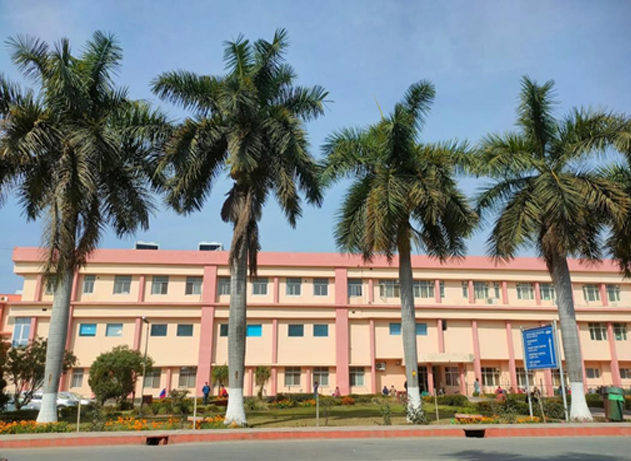
Snippets of lush green campus supporting biodiversity
Cultural Conservation through Harela Festival
SRHU celebrates Harela, a traditional Uttarakhandi festival symbolizing environmental reverence, with an annual campus-wide tree plantation drive. This festival not only honours local cultural heritage but also reinforces the value of nature worship and conservation among students and staff.
Over the past few years, more than 100 trees of high ecological and medicinal importance — including Jamun, Amla, Litchi, Pipal, Haldi, Amaltas, Lagerstroemia, and Gulmohar — have been planted. These events have been led by Chancellor Dr. Vijay Dhasmana, who emphasized reconnecting the younger generation with traditional wisdom and environmental ethics.
On July 16, 2025, SRHU celebrated the Harela festival — a symbol of harmony with nature — by planting nearly 500 saplings across its campus. Saplings included Jamun, Peepal, Amaltas, Neem, and Lagerstroemia, known for their ecological and spiritual significance.
University leadership, faculty, and staff joined hands to reaffirm SRHU’s ethos of environmental conservation and cleanliness as civic duties.
‘A Tre e in the Name of Mother’ – Independence Day Drive
On 15th August 2024, SRHU launched a unique initiative titled
‘A Tree in the Name of Mother’ to mark the 78th Independence Day.
Spearheaded by Chairman Dr. Vijay Dhasmana, this plantation drive celebrated the
bond between patriotism and environmental stewardship.
Faculty, staff, and students participated enthusiastically, planting trees as a tribute to their mothers,
symbolizing nurturing care for both family and the planet.
World Environment Day Celebrations
Every year on June 5, SRHU observes World Environment Day with campus-wide and village-level plantation drives. The day serves as a powerful reminder of SRHU’s ongoing commitment to biodiversity, sustainability, and climate action.
Tree planting, environmental pledges, and awareness campaigns are organized across departments, encouraging deep environmental consciousness among students and faculty alike.
On June 5, 2025, the University carried out a series of activities across its academic schools. This year’s theme, “Ending Plastic Pollution”, was interwoven with initiatives aimed at fostering a deeper environmental consciousness among students and faculty.
A highlight of these activities was the Tree Plantation Drive.
Tree Plantation by RDI
The Rural Development Institute (RDI) at Swami Rama Himalayan University continues to champion environmental sustainability through grassroots-level action.
As part of its ongoing commitment to ecological restoration and community empowerment, the RDI team has organized multiple tree plantation drives across rural areas in Uttarakhand.
These drives, conducted in collaboration with local villagers, schoolchildren, and community leaders, focus on planting medicinal, fruit-bearing, and native trees that not only enhance green cover but also support livelihoods and long-term environmental resilience.
Enhancing Environmental Awareness and Education
Enhancing Environmental Awareness and Education
In alignment with global imperatives, SRHU has undertaken a series of structured, interdisciplinary, and participatory initiatives to cultivate environmental literacy and promote ecologically responsible behaviour across its academic and social ecosystem.
Academic Lectures and Expert Dialogues
On April 23, 2024, a guest lecture was organized under the auspices of the National Academy of Sciences, Uttarakhand Chapter. Distinguished environmentalist and historian Mr. Ajay Sharma delivered a keynote address, contextualizing the anthropogenic causes of ecological degradation and underscoring the importance of environmental stewardship. The lecture also offered a historical and geographical perspective on the evolution of Dehradun’s urban and ecological landscape.
Vice-Chancellor Dr. Rajendra Dobhal highlighted the relevance of the 2024 Earth Day theme, “Planet vs. Plastic”, emphasizing SRHU’s institutional initiatives such as the establishment of a plastic bank to support the reduction of single-use plastics and enhance waste management systems.
Distinguished environmentalist Mr. Ajay Sharma delivers the keynote address during the Earth Day guest lecture at SRHU.
On June 5, 2024, SRHU hosted an inter-institutional seminar on environmental protection, focusing on river conservation and drought preparedness. Eminent speakers including Dr. Lokesh Ohri (Been There Doon That), Dr. Brij Mohan Sharma (SPECS), and Dr. Vinod Bhatt (Navdanya Biodiversity Farm) addressed critical themes such as biodiversity preservation, ecosystem resilience, and indigenous knowledge systems for sustainable agriculture. Select faculty members and researchers were also recognized for their contributions to environmental sustainability.
Eminent speakers and participants at the inter-institutional seminar on World Environment Day 2024 at SRHU.
In September 2024, SRHU’s Himalayan School of Pharmaceutical Sciences (HSPS) and Rural Development Institute (RDI) jointly hosted a special session featuring Padma Bhushan awardee Shri Chandi Prasad Bhatt. Drawing upon his decades of experience in grassroots environmental activism, Mr. Bhatt contextualized the challenges confronting Himalayan ecosystems—such as deforestation, resource overuse, and climate vulnerability—and advocated for collaborative, interdisciplinary responses involving policymakers, scientists, and communities.
He also emphasized the role of higher education institutions in fostering ecological literacy, sustainable development, and student-led environmental initiatives.
Padma Bhushan awardee Shri Chandi Prasad Bhatt addresses SRHU students on Himalayan environmental challenges.
Pedagogical Integration and Student Engagement
The Himalayan College of Nursing (HCN) marked World Environment Day through creative engagement initiatives involving poster and slogan competitions. Under the supervision of Ms. Preeti Prabha and guided by Principal Dr. Sanchita Pugazhendi, students produced 16 entries highlighting core environmental themes such as deforestation, pollution, climate change, and biodiversity loss. This initiative served as a pedagogical tool to integrate environmental discourse into nursing education while fostering cross-disciplinary awareness.
Students of HCN actively engage in a poster-making competition, expressing environmental protection themes.
An inter-semester environmental quiz was conducted with participation from 145 B.Sc. Nursing students, focusing on ecological principles, current environmental challenges, and climate policy frameworks. The competition promoted informed citizenship among future healthcare professionals and was coordinated by the Literary Committee of HCN.
On April 22, 2025, the IEEE Student Branch at SRHU hosted a multidisciplinary event titled “Green Future: Celebrating World Earth Day”. Activities included a quiz competition, environmental skit, wellness and sustainability session, and a campus-wide plantation drive. The program, attended by 132 students, effectively bridged scientific discourse with civic action and cultural expression, demonstrating the value of experiential learning in environmental education.
Students of SRHU’s IEEE Student Branch take a collective pledge to protect the environment during the ‘Green Future’ event on April 22, 2025.
Community Outreach and Field-Based Environmental Literacy
The Department of Community Health Nursing (HCN) conducted a targeted environmental awareness campaign in Thano village, engaging local schoolchildren through theatrical performances and poster exhibitions. The initiative aimed to foster environmental literacy among the younger generation while promoting participatory, community-based ecological action.
The event also included a tree plantation ceremony led by faculty members, demonstrating practical approaches to environmental conservation and sustainable practices. Through these activities, students and faculty emphasized the importance of preserving local biodiversity, planting native and fruit-bearing trees, and adopting environmentally responsible behaviors in daily life.
This initiative reflects SRHU’s commitment to integrating field-based experiential learning into its curriculum, connecting academic knowledge with real-world ecological challenges, and encouraging students to become active contributors to sustainable community development.
HCN faculty and students lead environmental awareness and tree plantation activities with schoolchildren in Thano village.
Combatting Land Degradation and Desertification
Rainwater Harvesting
Swami Rama Himalayan University (SRHU) receives an average annual rainfall of 2073.3 mm, creating significant potential for rainwater harvesting. The total annual volume of rainwater available across various campus surfaces—including rooftops, paved roads, open areas, and green belts—has been estimated at approximately 3,81,408.7 cubic meters.
To harness this resource efficiently, SRHU has implemented a comprehensive rainwater harvesting system featuring 16 recharge pits, 2 borewell recharge units, and 3 additional recharge pits constructed during 2024–25 to enhance groundwater recharge capacity.
A notable initiative includes the installation of an innovative 150 KL underground rainwater harvesting tank at the Medical College, equipped with an advanced filtration unit tailored to rainfall patterns. This system is designed to supply 3,000 liters per day for use in 119 toilets and 138 bathroom taps across the Medical and Nursing Colleges. Annually, 9.45 lakh liters of harvested water are used for sanitation, while 1.57 crore liters are recharged into the ground through infiltration wells.
These measures support long-term groundwater sustainability, reduce dependence on municipal supply, and demonstrate SRHU’s commitment to environmental stewardship.
Rainwater harvesting pit at SRHU near MBBS Girls Hostel.
Rainwater harvesting pit near Cardio Block, SRHU.
Underground water tank at SRHU Medical College.
Recharge pit near University Office, SRHU.
Reduction of Pollution and Degradation
Soil Conservation Through Effluent Treatment
Swami Rama Himalayan University (SRHU), in its commitment to environmental sustainability and responsible resource management, has implemented a robust Effluent Treatment Plant (ETP) to contribute actively towards soil conservation and ecological health, in alignment with Sustainable Development Goal (SDG) 15: Life on Land. The wastewater generated from multiple sources across the SRHU campus—including laboratories, laundry services, hospital facilities, and utility areas—is collected and treated through two advanced systems:
- Sewage Treatment Plant (STP) using Moving Bed Biofilm Reactor (MBBR) technology combined with extended aeration-activated sludge process, which ensures the effective removal of organic and inorganic matter.
- STP with a capacity of 1 MLD located at SRHU.
- Activated carbon and dual media filters in operation for advanced wastewater treatment.
- High-capacity air blowers supporting the aeration process.
- Red-marked tap supplying treated wastewater from the sewage treatment plant, promoting sustainable water reuse for landscaping and greenery maintenance.
- Dedicated Effluent Treatment Plant (ETP) with a daily capacity of 90,000 litres, designed specifically to remove toxic and non-toxic chemical substances, especially from hospital and laboratory operations.
The ETP ensures the wastewater is treated to meet or exceed the safety and environmental standards prescribed by the State Pollution Control Board. The treated water undergoes rigorous quality assessments before being repurposed for horticultural use across the University’s parks, gardens, and green zones.
ETP at SRHU designed to treat and recycle wastewater from institutional activities.
Sewage Treatment Plant with MBBR technology at SRHU.
Treated wastewater reused for landscaping and green zones.
</section
Plastic-Free Campus
To reinforce its commitment to sustainability, the University has installed “Plastic-Free Campus” signage across the campus. These signs serve as constant reminders for students, staff, and visitors to avoid single-use plastics and support the university’s initiatives like the Plastic Waste Bank and plastic-to-diesel recycling project.
The signage not only promotes awareness but also fosters a culture of environmental responsibility within the University community.
Signages promoting a plastic-free campus at SRHU, encouraging sustainable practices among students and staff.
Plastic Bank for Recycling
SRHU has established a Plastic Bank aimed at promoting the recycling of single-use plastics. This initiative encourages the collection and proper disposal of plastic waste, contributing to the reduction of plastic pollution on campus.
Plastic Bank at SRHU promoting recycling and reducing plastic waste on campus.
Innovative Plastic-to-Diesel Initiative
From 2021 to 2025, Swami Rama Himalayan University recycled a total of 5,600 kg of plastic in collaboration with CSIR-IIP, its Social Technology Partner for the Plastic-to-Diesel Lab project. This initiative, launched alongside the Plastic Waste Bank in 2022, reflects the University’s commitment to sustainable waste management and innovative recycling solutions.
Through this partnership, collected plastic waste was processed into fuel, supporting both environmental conservation and technological advancement in plastic waste utilization.
MoU between SRHU and SDC for sustainability and plastic waste management.
Integration of Renewable Energy and Sustainable Practices
Solar Power Initiatives
As part of its broader mission to reduce its carbon footprint and environmental impact, SRHU has made solar energy adoption a central component of its energy strategy, aligning with Sustainable Development Goals (SDG 15) for environmental stewardship.
| S. No. | Initiative/Component | Details |
|---|---|---|
| 1 | Total Solar Energy Generated (Past 3 Years) | 6,112,417 kWh |
| 2 | Total Electricity Demand (3 Years) | 43,682,417 kWh |
| 3 | Percentage of Energy Met by Solar | 13.99% |
| 4 | Estimated Cost Savings | ₹1.96 crore (approx.) |
| 5 | Surplus Energy Exported to Grid |
2021–2022: 80,160 kWh 2022–2023: 121,260 kWh 2023–2024: 114,796 kWh |
| 6 | New Solar Plant Commissioned | 17 August 2024 |
| 7 | New Solar Plant Capacity | 1 MW rooftop solar (545-watt modules) |
| 8 | Plant Area Covered | ~4,500 square meters |
| 9 | Monthly Energy Generation (New Plant) | Approx. 136,435 kWh/month |
| 10 | Power Purchase Agreement (PPA) Partner | M/S Baskhi Engineering Works |
| 11 | Environmental Impact |
• Reduced fossil fuel reliance • Lowered GHG emissions • Contributed to regional energy sustainability |
Installation of new solar power plant at SRHU.
Rooftop solar panels at School of Management and School of Science and Technology.
Inverter and electrical control panel at Guest House rooftop.
Aerial view of solar panels at HIMS (Google Maps).
Promotion of Bicycle Usage
SRHU promotes the use of bicycles as a sustainable, healthy, and zero-emission mode of transport within the campus. The campus infrastructure is designed to support cycling with wide internal roads and minimal motor vehicle traffic, making it safe for cyclists.
The campus offers an e-bike rental facility exclusively for students to conveniently travel across the university grounds. These electric bikes provide an eco-friendly, efficient, and cost-effective way to navigate the campus, reducing reliance on conventional vehicles and promoting sustainable mobility. Students can rent e-bikes for short durations, making it easier to attend classes, visit facilities, and move around quickly without hassle.
This initiative supports the university’s commitment to green transportation and enhances the overall campus experience.
E-bike rental facility available for students to commute sustainably across the campus.
Electric Vehicle for Internal Transport
The institution is committed to promoting sustainable and eco-friendly transportation solutions within the campus. We have integrated electric vehicles (EVs) into our campus mobility system, facilitating efficient and green transportation for students, faculty, and staff.
These EVs are maintained through a structured energy management approach, ensuring their readiness and reliability for campus operations. This initiative aligns with national guidelines and the evolving landscape of EV infrastructure.
Electric vehicle used on campus to promote green and sustainable transportation.
Recognition for Green Practices
Recognition for Green Practices
The University earned top honours in 2025 at regional sustainability forums, including the Platinum Award for green practices at the CII Northern Region and previously securing the Gold Award from CII for eco-friendly initiatives.
Before this, SRHU was recognized as Renewable Energy Champion at the CII Northern Region Green Practices Awards, 19–20 December 2024, Gurugram.
SRHU bagged the Platinum Award in the Service Category at the 4th CII Northern Region Green Practice Awards 2025, recognizing its strong commitment to environmental sustainability.
SRHU recognized as Renewable Energy Champion at CII-Northern Region Green Practices Awards 2024.