Ph.D Research

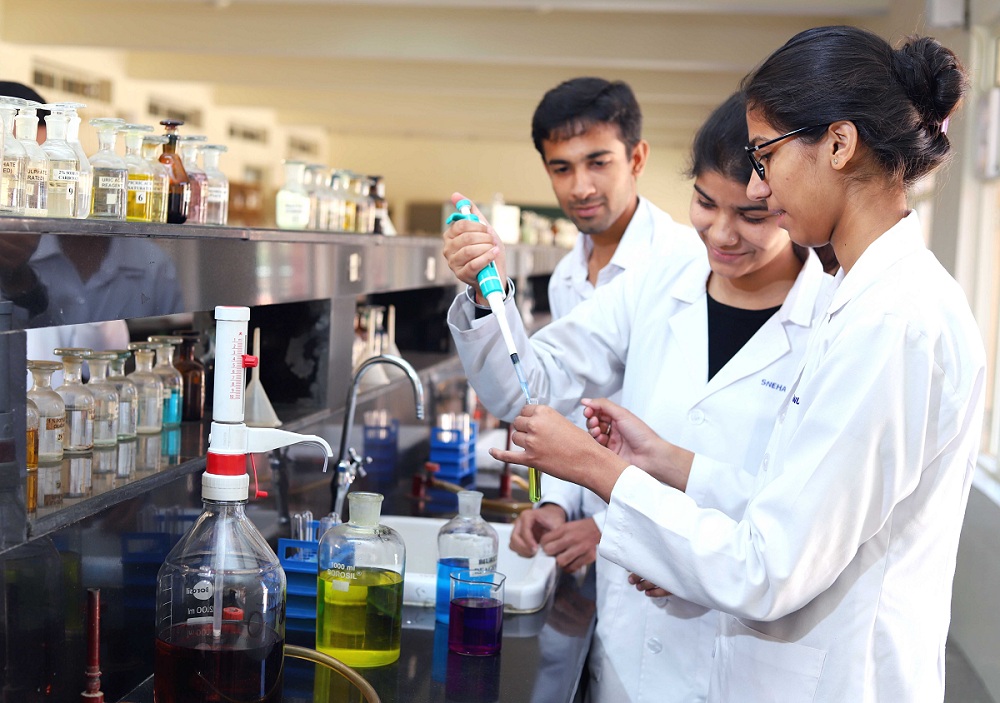
Swami Rama Himalayan University (SRHU) is a research-driven institution committed to advancing knowledge through innovation, interdisciplinary collaboration, and translational impact. Nestled in the Himalayan foothills, SRHU is a unique treasure trove of biodiversity and conserved gene pools—providing exceptional opportunities for scientific exploration, health research, technology development, and societal transformation. With state-of-the-art laboratories, an NABL-accredited diagnostic ecosystem, a 1,200+ bed teaching hospital, access to a comprehensive Learning Management System (LMS), and strong cross-disciplinary expertise, SRHU offers an outstanding environment for high-quality doctoral research. Its strategic location draws students from rural Himalayan regions to metropolitan India, contributing significantly to multi-dimensional capacity building. SRHU is recognized as a Scientific and Industrial Research Organization (SIRO) by the Department of Scientific and Industrial Research (DSIR), Government of India. The University also hosts an Intellectual Property Management Cell (IPMC), initially sanctioned by the UCOST and now maintained by university, enabling researchers to protect and commercialize intellectual property and fostering a culture of creativity and innovation.

Interdisciplinary Research Ecosystem

SRHU brings together diverse discipline i.e Medicine & Health Sciences, Biosciences, Nursing, Pharmacy, Management, Engineering & Technology, Yoga Sciences, Psychology, Clinical Research, and Computer Science to create a seamless research environment leading
from:

    • Science to Medicine
    • Bench to Bedside Translation
    • Technology to Production
    • Management to Business Strategy

This synergy enables researchers to test, validate, and refine ideas using the University’s robust clinical, laboratory, and computational infrastructure.
Research begins early at SRHU. UG and PG students engage in course-embedded research projects and later undertake independent studies with faculty and industry mentors—building a strong pipeline of future scientists and innovators.

Research Support & Funding

SRHU provides in-house seed research grants to encourage faculty-led and student-led innovation. A dedicated Internal Research Committee evaluates and supports impactful projects, especially those targeting translational outcomes. Departments also secure substantial extramural funding from bodies such as ICMR, UCOST, CSIR, DBT, ANRF and other national agencies.

Research Capacity Building

To strengthen research culture, the University regularly conducts:
• National seminars & international symposia
• Hands-on training workshops
• Research methodology & data analysis programs
• Specialized training in Bio-IT tools and AI applications in healthcare

SRHU hosted the Indo–UK Symposium on “Precision Medicine: Genes, Environment the Data Challenge”—reflecting the University’s global engagement and scientific leadership.
The University has also launched a flagship M.Sc. in Clinical Research, cultivating cross-disciplinary skills in data science, clinical investigations, and translational medicine. Students are already contributing to research on cancer pain burden, neurodevelopment, iodine deficiency disorders, thyroid profiling, and maternal–fetal outcomes.

Ph.D. Programmes Offered at SRHU

SRHU fosters a dynamic research environment across Medical Sciences, Biosciences, Technology, and Allied disciplines. Key research thrusts include:
Biochemistry, Biotechnology & Microbiology
Environmental biotechnology, molecular & cell biology, genetics, nano-toxicology, virology, bioinformatics & systems biology.

Biochemistry, Biotechnology, Microbiology

Environmental Biotechnology, Biological Research, Biochemistry, Microbiology Genetics, Neurobiology, Virology, Human, Animal, Plant, Microbial Cell and Molecular Biology. Nano Biotechnology, Nano toxicology, Bio informatics and Systems Biology.

Clinical Psychology

Research in Psychological Assessment and Testing: Bio-Psycho-social Model of mental illness, Intelligence testing, Personality Assessment, Neuropsychological Assessment, Research in Psychotherapy: Bio-Psycho-social Model of psychotherapy, Integrated Psychotherapy, Humanistic Psychotherapy, Psychotherapy Based on Bhagwad Gita, Mindfulness Based Cognitive Therapy.

Epidemiology

Health services research, Cancer Epidemiology, Cardiovascular Epidemiology, Clinical Epidemiology, Environmental and Occupational Epidemiology, Epidemiologic Methods, Epidemiology of Aging, Infectious Disease Epidemiology, Nutritional Epidemiology, Reproductive, Perinatal and Pediatric Epidemiology, Social Epidemiology, Public and Population Health, Global Health Epidemiology, Molecular Epidemiology.

Hospital Administration

Making hospital services cost effective, Timeline for emergency medical services, Hospital acquired infections, Hospital information system, Medical records keeping & retrieval system, Patient safety in Hospitals, Inventory management of hospital pharmacy services, Public outrage in hospital setting, Public grievance mechanism, Multidisciplinary approach in hospital management, Health education with in hospital, expectation Vs realities in patient outcome, attitude of health care work.

Immunology

Cancer immunology and immunotherapy, Autoimmunity and Immune- mediated diseases, Immune system development and Regeneration, Adaptive immunity, Innate immunity, Infectious diseases, Transplantation.

Management (Finance, Human Resource, Marketing)

Accounting and Finance, Economics, Human Resource, Marketing Management.

Medical Physics

Medical imaging, Nuclear medicine, Radiation protection and Radiation oncology.

Cancer Biology/Cancer Medicine

Cancer genetics & Genomics, Cancer immunotherapy and vaccines, Cancer metabolism, Cell Signaling & Regulation, Cell based therapy, Computational Oncology, Clinical Oncology, Cancer prevention, Drug Development and Clinical Trials, Community Oncology, Palliative and Supportive Oncology, Nursing and Psychosocial Issues in Oncology

Pharmacology (Medical)

Clinical pharmacology, Cardiovascular pharmacology, Neuropharmacology, Respiratory pharmacology, Renal pharmacology, Gastrointestinal pharmacology, Cancer pharmacology, Pharmacovigilance, Adverse drug reaction monitoring, Drug interaction studies, Pharmaco-epidemiological studies and Pharmaco-economics, Drug utilization studies.

Nursing Sciences

Child Health Nursing, Community Health Nursing, Medical Surgical Nursing, Mental Health Nursing, Obstetrics & Gynecological Nursing.

Pharmacy

Pharmaceutics, Pharmaceutical Chemistry, Pharmacology.

Psychology

Researches on Cognition: Cognitive Psychology, Neuro-cognitive-behavioural Model, Memory and related areas, Sense Perception and related process Researches on Personality: Aptitude, Models of Human Personality, Bio-psycho-social Model of Personality, Thinking and creativity, Mental Defence Mechanism Researches on Behaviour Modification: Integrated model of Behaviour in western and Indian Psychology, Learning : Classical condition / Associative Learning, Learning : Operant condition / Instrumental Learning (Biofeedback and neuro-feedback), Yoga Psychology Based Techniques to Modify Behaviour, Self-Awareness Training Model to modify Behaviour, Application of Yoga psychology

Physiology

Yoga in stress disorders, Exercise physiology, Occupational Health, Non- communicable diseases.

Yoga Sciences

Yoga and its allied subjects.


Clinical Research

Molecular and Cellular Basis of Disease, Clinical and Diagnostic Biochemistry, Cancer Biochemistry, Genetic and Epigenetic Regulation, Metabolic Disorders and Enzyme Deficiencies, Hormonal and Reproductive Biochemistry, Nutritional Biochemistry, Laboratory Quality and Automation, Immunological and Inflammatory Disorders, Bioinformatics.

Medical Biochemistry

Healthcare interventions, Drug Development and Clinical Trials, Epidemiology, Public Health, and Real-World Evidence, Pharmacovigilance and Regulatory Science, Precision Medicine, Genomics, and Translational Research, Artificial Intelligence, Data Analytics, and Health Technology Assessment.

Computer Science

Artificial Intelligence, Data Science and Machine Learning, Cyber Security, Internet of Things (IoT), Wireless Network, Software Engineering, Blockchain Technology, Cloud Computing.

University offers PhD program in the following areas:

S. No. Specializations Code Eligible Subjects Eligibility to seek admission in Ph.D. program as per the UGC (Minimum Standards and Procedures for Award of Ph.D. Degree) Regulations, 2022
1 Biochemistry 01 Master’s degree in Biochemistry/ Biotechnology or any other related fields Eligibility to seek admission to the Ph.D. program will be:
  1. Candidates who have completed any of the following:
    • 1-year/2-semester master’s degree programme after a 4-year/8-semester bachelor’s degree program OR
    • 2-year/4-semester master’s degree programme after a 3-year bachelor’s degree program OR
    • Qualifications declared equivalent to the master’s degree by the corresponding statutory regulatory body OR
    • Provided that a candidate seeking admission after a 4-year/8-semester bachelor’s degree program has a minimum of 75% marks in aggregate or its equivalent grade on a point scale wherever the grading system is followed. OR
  2. Candidates who have completed the M.Phil. program with at least 55% marks in aggregate or its equivalent grade in a point scale wherever grading system is followed or equivalent qualification from a foreign educational institution accredited by an assessment and accreditation agency which is approved recognized or authorized by any authority, established or incorporated under a law in its home country or any other statutory authority in that country to assess, accredit or assure quality and standards of educational institutions, shall be eligible for admission to the Ph.D. program.
  3. Candidates must have secured at least 55% marks in aggregate or its equivalent grade in a point scale wherever grading system is followed or equivalent qualification from a foreign educational institution accredited by an assessment and accreditation agency which is approved, recognized or authorized by an authority, established or incorporated under a law in its home country or any other statutory authority in that country to assess, accredit or assure quality and standards of the educational institution.
  4. A relaxation of 5% marks or its equivalent grade may be allowed for those belonging to SC/ST/OBC (non- creamy layer)/Differently Abled, Economically Weaker Section (EWS) and other categories of candidates as per the decision of the UGC from time to time.
2 Biotechnology 02 Master’s degree in Biotechnology/ Biochemistry/Botany/ Zoology/ Microbiology, or any other related fields
3 Clinical Psychology 03 Master’s degree in Clinical psychology/rehabilitation psychology/ applied psychology via regular mode.
4 Epidemiology 04 Master’s degree in Epidemiology/ Community Medicine or M.Sc. in Clinical Research
5 Hospital Administration 05 Master’s degree in Hospital Administration or any other related fields
6 Immunology 06 Master’s degree in Immunology/ Biochemistry/ Biotechnology/ Microbiology or any other related fields
7 Management (Finance, Human Resource, Marketing) 07 Master’s degree in Commerce/ Business Administration/ Human Resource Management/ Finance/ Marketing or any other related fields
8 Medical Physics 08 Master’s degree in Medical Physics or Master’s degree in Physics with Post M.Sc. Diploma in Medical Physics
9 Microbiology 09 Master’s degree in Microbiology/ Biotechnology or any other related fields
10 Nursing Sciences 10 Master’s degree in Nursing Sciences or any other related fields
11 Cancer Biology/ Cancer Medicine 11 Master’s degree in Oncology Sciences/ Pharmacology/ Microbiology/ Biochemistry/ Biotechnology or any other related fields
12 Pharmacology 12 Master’s degree in Pharmacology (Medical), or any other related fields
13 Pharmacy 13 M. Pharm in appropriate branch of specialization in Pharmacy or related fields
14 Psychology 14 Master’s degree in psychology/neuropsychology/ child psychology/ cognitive psychology/ rehabilitation psychology applied psychology/social psychology in regular mode
15 Physiology 15 Master’s degree in Physiology, or any other related fields
16 Yoga Sciences 16 Master’s degree in Yoga, or any other related fields
17 Clinical Research 17 Master’s Degree (Bio based) or a professional degree (Bio based) declared equivalent to master’s degree by the corresponding statutory body.
18 Medical Biochemistry 18 MD Biochemistry /P. G Diploma in Clinical Pathology/ Postgraduate degree in Medical Biochemistry (MSc) via regular mode of study
19 Computer Science 19 Master’s degree in Computer Science/Computer Applications/Information Technology (e.g., M.Sc. Computer Science, M.C.A., MTech. /M.E. in CS/IT or equivalent)
   Admissions Form         

Admission Open For 2025

×
Nursing Advisor at Himalayan Institute Hospital Trust

Dr. Kathleen M. McKeehan

Dr. Kathleen M. McKeehan is a highly regarded American nursing leader and researcher who has dedicated decades to advancing nursing education and clinical practices at the Himalayan Institute Hospital Trust (HIHT) and Swami Rama Himalayan University (SRHU) in Dehradun, India. Serving as the Nursing Advisor, she has been instrumental in shaping the Himalayan College of Nursing into a center of excellence, emphasizing the integration of compassionate care with modern medical technology.

Dr. McKeehan’s academic background is extensive, including a Ph.D. in nursing from the Case Western Reserve University and post-doctoral research at Ohio State University. Before her long-term commitment to the Himalayan Institute, she held prestigious academic positions, such as the Dorothy Rider Pool Professorship at Allentown College. Her research expertise spans oncology nursing, continuing education strategies, and innovation diffusion in healthcare settings.

At HIHT, she is a central figure in tradition and mentorship, often leading the symbolic Lamp Lighting and Oath Ceremony for new nursing students. Her work focuses on fostering a vibrant research culture and ensuring that nursing curricula meet international standards while remaining rooted in the visionary humanitarian principles of the institute's founder, H.H. Dr. Swami Rama.

Former Director, LBSNAA

Dr. Sanjeev Chopra (IAS Retd.)

Dr. Sanjeev Chopra (IAS Retd.) is a distinguished former Indian Administrative Service officer (1985 batch, West Bengal cadre), historian, and author. He is most widely recognised for his tenure as the Director of the Lal Bahadur Shastri National Academy of Administration (LBSNAA) from 2019 until his retirement in March 2021. Throughout his 36-year bureaucratic career, he served in high-profile roles, including Additional Chief Secretary to the Government of West Bengal and Secretary of Industrial Development in Uttarakhand.

Since retiring, Dr. Chopra has emerged as a prominent literary figure and public intellectual. He is the Founder and Festival Director of Valley of Words, an international literature and arts festival based in Dehradun. An acclaimed author, his works include We, the People of the States of Bharat: The Making and Remaking of India’s Internal Boundaries (2022) and The Great Conciliator: Lal Bahadur Shastri and the Transformation of India (2025).

He holds a PhD in Management and has been a fellow at prestigious institutions like Cornell University and the World Bank. Currently, he continues to contribute as a columnist for ThePrint and serves as a Senior Fellow in Contemporary History at the Prime Ministers' Memorial and Library.

FRSB, FRSB

Prof. Graham Roy Ball

Prof. Graham Roy Ball, FRSB, is a distinguished expert in bioinformatics and computational systems biology. He currently serves as a Professor at Anglia Ruskin University (ARU), where he is the Director of the Medical Technology Research Centre. He also holds a significant role as the Chief Scientific Officer (CSO) of Intelligent OMICS Ltd, a company specializing in AI-driven biomedical discovery.

Prof. Ball's work focuses on applying Artificial Neural Networks (ANNs) and machine learning to solve complex biological problems. His research spans cancer systems biology, drug discovery, and the development of "molecular digital twins" for disease states. He is particularly noted for his work on the Nottingham Prognostic Index Plus (NPI+), a system that uses biomarkers to improve breast cancer patient stratification.

Before joining ARU, he was a Professor of Bioinformatics at Nottingham Trent University (NTU) for over two decades, where he led the John van Geest Cancer Research Centre’s biostatistics efforts. He has published more than 280 journal papers and holds multiple patents in the field of AI and omics data analysis. He is a Fellow of the Royal Society of Biology (FRSB) and serves on the editorial boards of prominent journals like Proteomics.

Prof. & Researcher at the Children’s Hospital of Philadelphia, University of Pennsylvania

Dr. Vinay Nadkarni

Dr. Vinay Nadkarni, MD, MS, is a world-renowned leader in pediatric critical care and resuscitation science. He serves as a Professor and Endowed Chair at the Children’s Hospital of Philadelphia (CHOP) and the University of Pennsylvania Perelman School of Medicine. He is the founding director of the CHOP Academy for Resuscitation of Children and the Center for Simulation, Advanced Education and Innovation.

Throughout his distinguished career, Dr. Nadkarni has served as President of the Society of Critical Care Medicine (2023-2024) and Co-Chair of the International Liaison Committee on Resuscitation (ILCOR). His research focuses on advancing CPR quality, sepsis management, and pediatric life support, contributing to over 850 peer-reviewed publications. He has also been a key figure in global health initiatives, including the ABC Stop the Bleed program in India and missions with Operation Smile.

Dr. Nadkarni has received numerous accolades, such as the American Heart Association’s Lifetime Achievement Award and the AAP Distinguished Career Award. He continues to mentor over 150 clinician-scientists while leading international efforts to strengthen the "chain of survival" for critically ill children worldwide.

Former Director General, UCOST

Mr. Sudhir Chandra Nautiyal

Mr. Sudhir Chandra Nautiyal is a highly accomplished civil servant and technocrat who served an illustrious 29-year tenure in the Industries Department of the Government of Uttarakhand. While he is often associated with leadership in state councils, he is most distinguished for his role as the Director of Industries. During his service, he was instrumental in positioning Uttarakhand as a leader in the MSME and Startup sectors.

A leather technology engineer from HBTU Kanpur with a Master’s in Economics, Nautiyal’s career spanned the private sector, public sector banking, and the Ministry of MSME. He is credited with leading the state to secure the first position in the North India Geographical Indication (GI) festival in 2022, successfully promoting indigenous products like Munsiyari Rajma and Ringal Craft.

Currently, he serves as a member of the Pravasi Uttarakhandi Cell in the Chief Minister’s Office, where he continues to facilitate investment and entrepreneurship for the state’s diaspora. His proactive approach has made him a respected figure in Indian industrial circles, recently earning him recognition at the Raj Bhavan for his lifelong contributions.

Former Fellow University of Liverpool, United Kingdom

Prof. Prabhu Narayan Mishra

Prof. Prabhu Narayan Mishra is a renowned Management Guru and academician with over 40 years of experience in teaching, research, and consulting. He is particularly recognized for his tenure as a Fellow in the Department of Economics & Accounting at the University of Liverpool, UK, where he served from 1996 to 1997. His international academic footprint also includes serving as a Senior Visiting Faculty at Tulane University, USA.

In India, Prof. Mishra has held several prestigious positions, including Director of the Institute of Management Studies (IMS) and officiating Vice Chancellor of Devi Ahilya University, Indore. He holds a Ph.D. in Mathematics from the University of Allahabad and is widely known for pioneering the study of Indian Ethos in Management, blending ancient Vedic wisdom with modern business theories.

A prolific scholar, he has supervised numerous doctoral students and authored several books and research papers. Prof. Mishra is also a dedicated philanthropist, serving as the Founder President of organizations like the Shri Krishna Foundation and Utkarsha, which focus on spiritual wisdom and community development. His multifaceted career is marked by prestigious awards, including the Commonwealth Academic Staff Fellowship and the United Nations Fellowship.

Ex Director, National JALMA

Prof. Kiran Katoch

Prof. Kiran Katoch is a highly respected academic researcher and medical scientist who served as the Director of the National JALMA Institute for Leprosy and Other Mycobacterial Diseases (NJILOMD) in Agra. With over four decades of experience, she has been a leading figure in the research and treatment of leprosy and tuberculosis in India. Her work is characterized by a unique focus on bridging clinical medicine with laboratory research to improve patient outcomes in mycobacterial infections.

A prolific scientist, Prof. Katoch has authored or co-authored over 150 research publications in prestigious national and international journals. Her seminal contributions include studies on the efficacy of multidrug therapy (MDT) for leprosy and the investigation of cardiovascular involvement in leprosy patients. For her outstanding research, she was honored with the Dr. C. G. S. Iyer Oration Award in 1989.

Beyond her administrative and research roles, she has served as the Editor of the Indian Journal of Leprosy and the President of the Tuberculosis Association of India (TAI). Even after her tenure as Director, she remains active as an ICMR Distinguished Scientist Chair, continuing to advocate for integrated health systems and innovative research to solve local health challenges.

Executive-in-Residence, S.P. Jain Institute of Management & Research

Mr. Prabhat Pani

Mr. Prabhat Pani is a distinguished corporate leader and academician with over 40 years of experience, currently serving as an Executive in Residence and Executive Director of the Centre for Impact in Sustainable Development at SPJIMR, Mumbai. An alumnus of IIM Ahmedabad, he began his career with the Tata Administrative Services (TAS) and has held numerous leadership roles across the Tata Group.

His corporate journey includes serving as the CEO of Ginger Hotels (Roots Corporation Ltd) and as the Executive Director of Taj SATS Air Catering. He also spent significant time in the telecom sector, holding senior roles at Tata Teleservices, Airtel, and BPL Cellular. Prior to his academic transition, he served as Head of Partnerships & Technology at Tata Trusts, where he led large-scale social impact initiatives.

At SPJIMR, Pani focuses on Sustainable Development and social sector interventions, bridging the gap between corporate efficiency and developmental needs. He is also a Senior Advisor at The Conference Board and continues to mentor social sector professionals. His work remains centered on building institutional capacity and leveraging technology for broad-based community impact.

Media Executive & Board Member, Times Group

Mr. A.P. Parigi

Mr. A.P. Parigi, is a veteran leader in the Indian media, entertainment, and telecommunications sectors with over 40 years of experience. He is most widely recognized as the Co-Founder of Radio Mirchi, where he served as the Managing Director and CEO of Entertainment Network India Ltd. (ENIL). Under his leadership, Radio Mirchi grew into India's largest private FM radio network, fundamentally changing the country's audio landscape.

Throughout his career, Parigi has held several high-profile roles, including Group CEO of Network18, CEO of BPL Mobile, and MD & CEO of Eros International Media. His strategic vision also spearheaded the Times Group’s entry into the Out-of-Home (OOH) media business. Beyond corporate leadership, he has served on the boards of major entities like Bennett Coleman & Co. Ltd. (The Times of India) and has been an advisor to global institutions such as the Saïd Business School at the University of Oxford.

An alumnus of the Delhi School of Economics and the Faculty of Management Studies (FMS), Delhi, Parigi was the first non-American to receive the Rensselaer Entrepreneur of the Year Award in 2009. Today, he continues to mentor next-generation leaders and advise organisations on growth, corporate governance, and digital transformation.

Former Director, IHBT

Dr. Sanjay Kumar

Dr. Sanjay Kumar, FNA, is a distinguished agricultural biotechnologist and the former Director of the CSIR-Institute of Himalayan Bioresource Technology (IHBT). Currently, he serves as the Chairman of the Agricultural Scientists Recruitment Board (ASRB), where he oversees the selection of top-tier scientific talent for India’s agricultural research sector. His leadership is defined by a commitment to converting high-end biotechnology into sustainable livelihoods for farmers in the Himalayan region.

During his tenure at CSIR-IHBT, Dr. Kumar achieved major milestones, including the historic introduction of Heeng (asafoetida) and monk fruit cultivation in India. His research spans plant molecular biology and genomics, specifically focusing on how Himalayan flora adapts to extreme environments. A fellow of all three major Indian science academies (FNA, FNASc, and FNAAS), he has published over 120 research papers. His work continues to play a vital role in strengthening India's bio-economy and ensuring long-term food security through innovation.

Pro-Chancellor, Perdana University, Malaysia

Dr. Mohan Swami 

Dr. Mohan Swami is a distinguished physician, entrepreneur, and educational visionary who currently serves as the Pro-Chancellor of Perdana University, Malaysia. A graduate of Mysore University, India, he began his medical career in 1978. He initially gained prominence in Sabah, where he established the largest private medical group practice, laying the foundation for his extensive career in healthcare management and corporate leadership.

Dr. Swami is widely recognized as the driving force behind the establishment of Perdana University in 2011. Under his leadership, the institution launched as a landmark public-private partnership, collaborating with world-class entities like the Johns Hopkins University School of Medicine. Beyond academia, he is the Executive Chairman of Chase Perdana Sdn Bhd and has held significant leadership roles in various multinational corporations across the healthcare, property, and hospitality sectors.

In addition to his professional achievements, Dr. Swami is a deeply spiritual individual. He serves as the President of the AHYMSIN (Association of Himalayan Yoga Meditation Societies International) and Chancellor of Swami Rama Himalayan University. For his immense contributions to education and the Malaysian economy, he was conferred the title of Tan Sri. He also serves as the Honorary Consul of Botswana in Malaysia, bridging international relations through diplomacy and philanthropy.

Mahamandleshwar Juna Akhara

Swami Avdheshanand

Swami Avdheshanand is one of India’s most influential spiritual leaders and the Acharya Mahamandaleshwar of the Juna Akhara, the largest order of Hindu monks. Born on November 24, 1962, in Bulandshahr, Uttar Pradesh, he displayed a profound spiritual inclination from childhood. Seeking higher truths, he renounced worldly life at a young age to practice intense meditation and austerity as a hermit in the Himalayas.

His teachings are rooted in Advaita Vedanta, focusing on self-realization, universal brotherhood, and the harmony of all religions. Beyond his role as a monastic leader, he is a globally respected philosopher who has addressed the United Nations and the World Economic Forum, advocating for global peace and environmental sustainability.

As the founder of Prabhu Premi Sangh, he oversees extensive social welfare projects, including healthcare initiatives, educational programs for the underprivileged, and environmental conservation efforts like the "Green Kumbh." A prolific author and orator, his discourses reach millions via television and digital platforms. Known for his serene demeanor and intellectual depth, Swami Ji continues to bridge the gap between ancient Vedic wisdom and modern global challenges, guiding seekers toward a life of purpose and spiritual clarity.