Published on: April 17, 2026
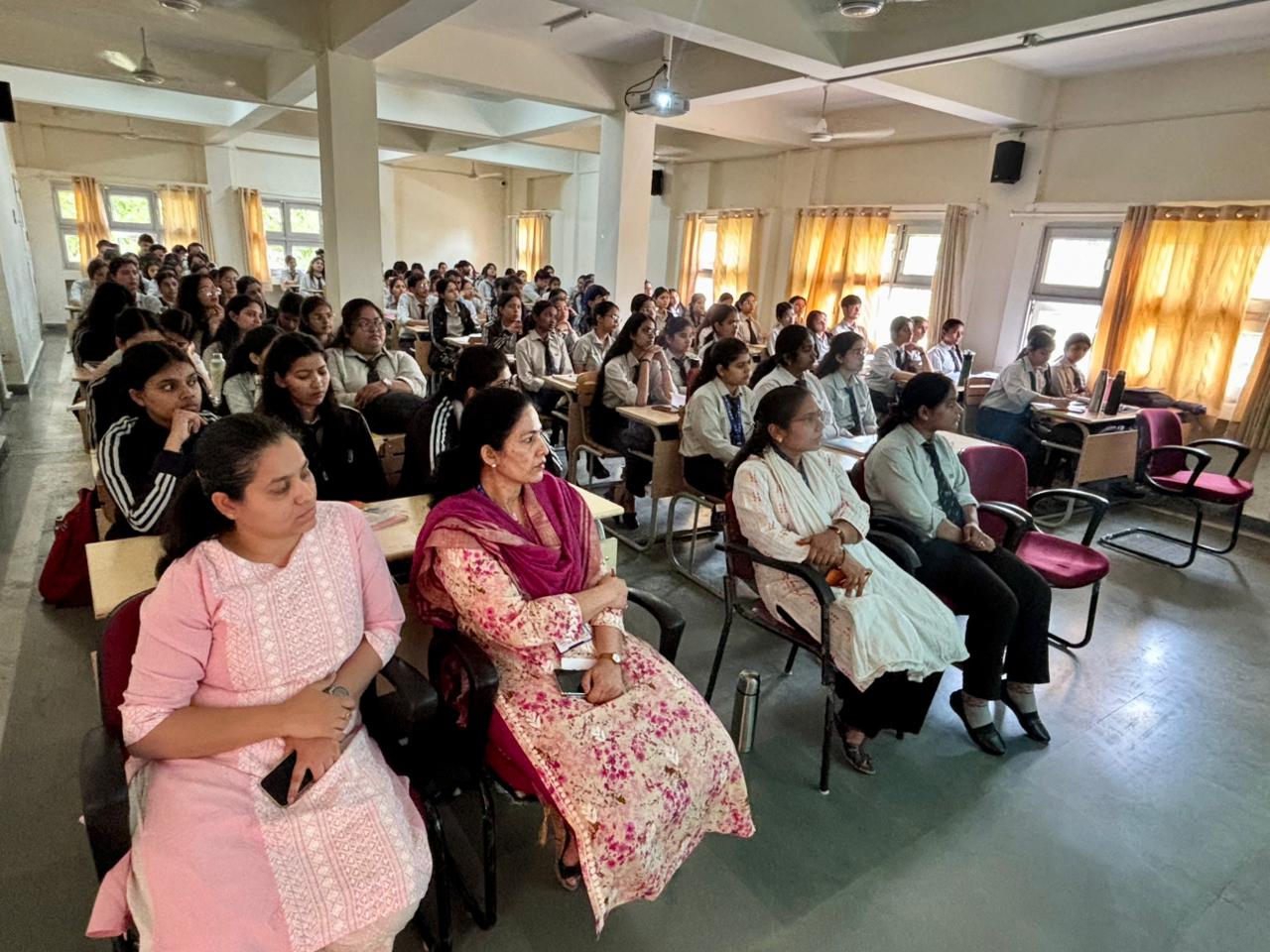
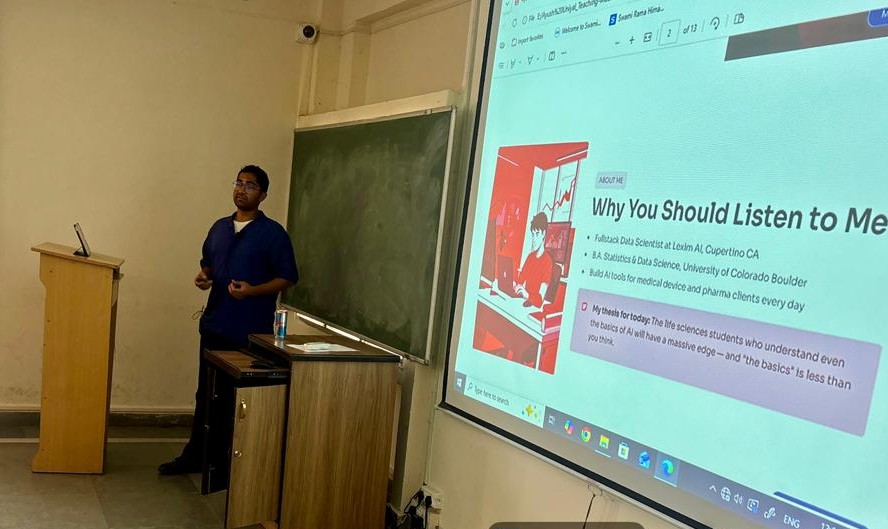
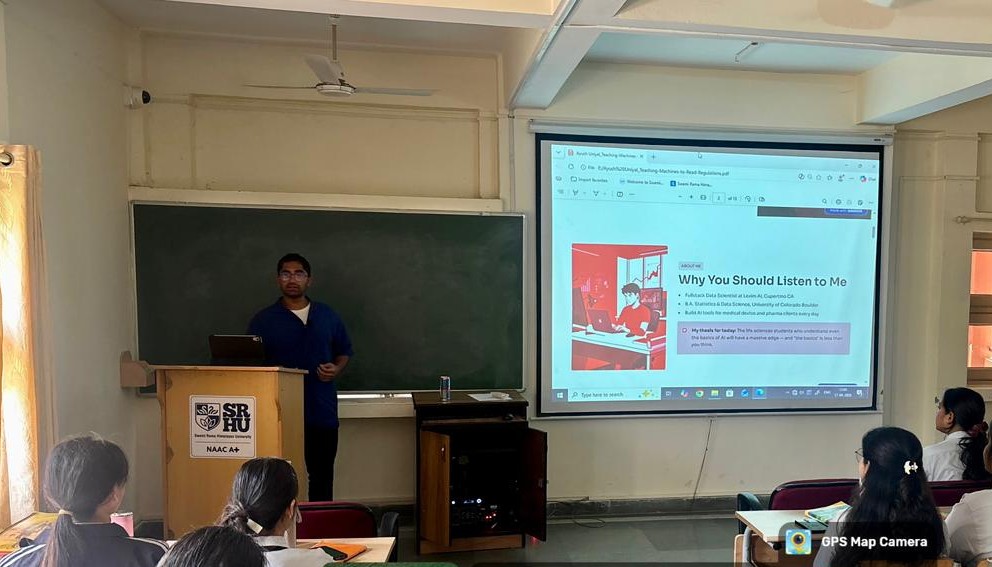
The School of Biosciences, Swami Rama Himalayan University successfully organized an insightful International Guest Lecture on “Emerging AI Tools in Medical Devices and Life Sciences” on 17th April 2026 by Mr. Ayush Uniyal Data Scientist and AI Builder, Lexim AI Inc., Cupertino, California, U.S.A. The session brought together students, faculty members, and researchers to explore the transformative role of Artificial Intelligence (AI) in modern healthcare and life sciences. The lecture was designed to provide a scientific perspective on the integration of artificial intelligence (AI) within biomedical engineering and life sciences research.
The session began with an academic introduction emphasizing the convergence of computational biology, biomedical engineering, and clinical sciences, highlighting AI as a critical enabler of next-generation healthcare systems. The invited international expert delivered a technically enriched discourse focusing on machine learning (ML), deep learning (DL), and data-driven modelling approaches in translational medicine.
A major component of the lecture addressed AI-enabled medical devices, with emphasis on algorithmic frameworks such as convolutional neural networks (CNNs) for medical image analysis, recurrent neural networks (RNNs) for temporal health data, and edge AI systems integrated into wearable biosensors. The speaker presented evidence-based examples demonstrating enhanced sensitivity and specificity in disease detection using AI-assisted radiomics and image segmentation techniques, particularly in oncology and cardiovascular diagnostics. Discussions also included regulatory considerations (FDA/CE compliance) and validation protocols for AI-based medical devices.
In the life sciences domain, the lecture explored advanced applications of AI in genomics, proteomics, and systems biology. The speaker elaborated on the use of AI-driven bioinformatics pipelines for high-throughput sequencing data analysis, including variant calling, gene expression profiling, and pathway enrichment analysis. The role of deep learning architectures in drug discovery—such as molecular docking prediction, quantitative structure–activity relationship (QSAR) modelling, and de novo drug design—was discussed, highlighting their capacity to significantly reduce time and cost in pharmaceutical
development.
The lecture further examined emerging paradigms including digital twin modeling in precision medicine, where computational replicas of patients are used to simulate disease progression and therapeutic outcomes. Additionally, AI-assisted robotic surgery, laboratory automation using intelligent systems, and integration of Internet of Medical Things (IoMT) were discussed as key drivers of future healthcare ecosystems.
A critical scientific perspective was provided on ethical AI, focusing on algorithmic bias, data heterogeneity, reproducibility, and patient data security. The importance of explainable AI (XAI) in clinical decision-making was emphasized to ensure transparency and trust in AI-driven interventions. The session concluded with a technical discussion and interactive Q&A, where participants explored research pathways, interdisciplinary skill. Overall, the lecture offered a comprehensive and scientifically grounded overview of AI’s transformative role in medical devices and life sciences, fostering deeper academic engagement and research-oriented thinking among attendees.