Published on: May 9, 2026
Venue: Auditorium, School of Science & Technology, Swami Rama Himalayan University
Organized By: School of Science and Technology under IEEE SRHU Student Branch (STB60226050)
Participants: 56
Coordinator: Dr. Vibhor Sharma, Associate Professor, School of Science & Technology
Resource Person: Dr. Anupama Namburu, Associate Professor, School of Engineering, Jawaharlal Nehru University, New Delhi
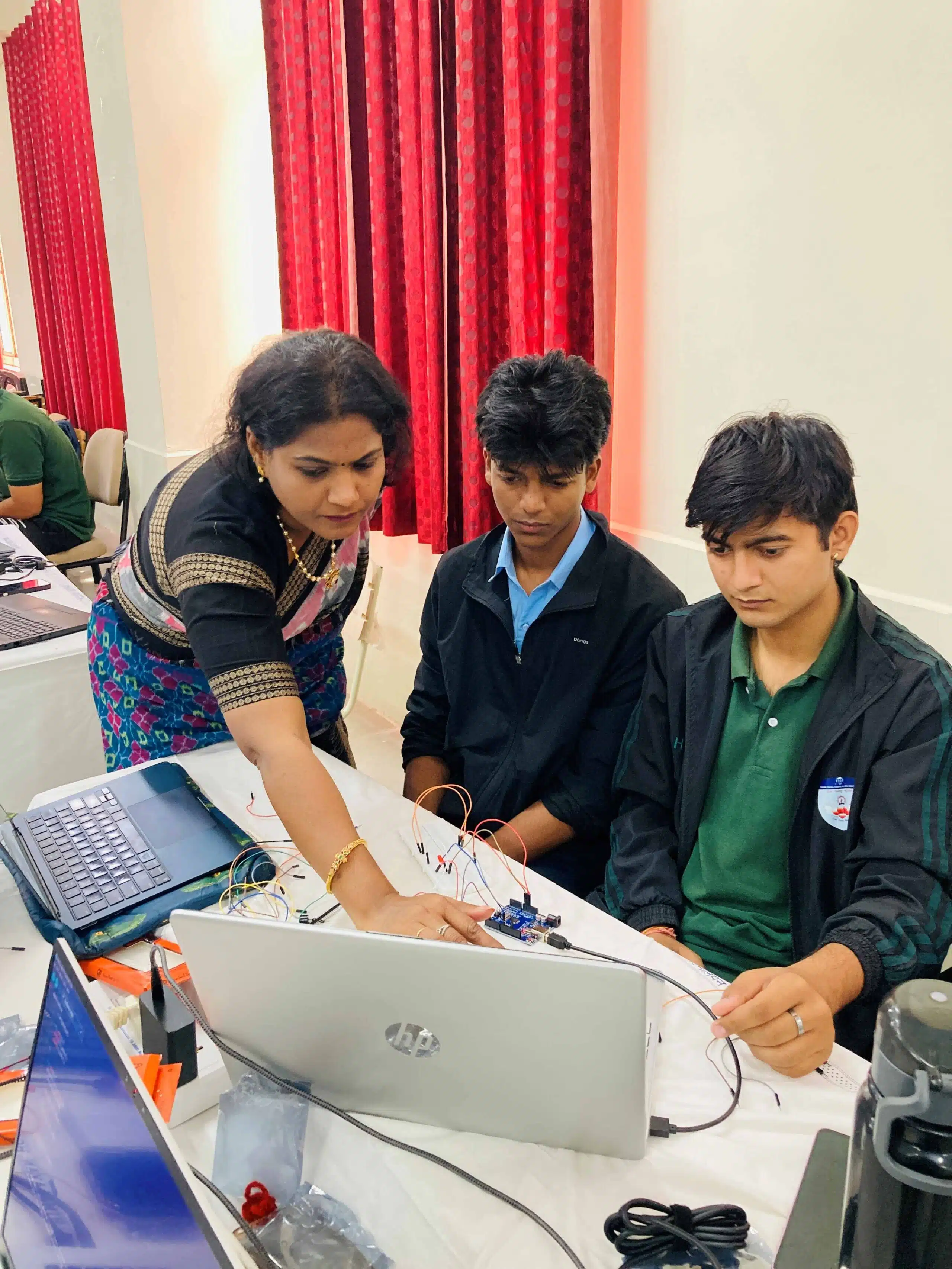
The School of Science & Technology organized a three-day technical workshop titled “IoT SPARK 2026 — A 3-Day Hands-on Workshop on Arduino & IoT with Medical Technology Applications” under the IEEE SRHU Student Branch (STB60226050) from 7th to 9th May 2026. The workshop was conducted by the resource person, Dr. Anupama Namburu. The primary objective of the workshop was to provide students with practical exposure to Arduino and Internet of Things (IoT) technologies with a special focus on healthcare and medical technology applications. The workshop covered simulation-based learning, hands-on hardware interfacing, and wireless communication techniques used in modern IoT systems.
On the first day, participants learned circuit simulation and Arduino programming using the Tinkercad platform. Students explored virtual circuit design, sensor interfacing, and testing of IoT applications in a simulated environment. The second day focused on hands-on practical sessions using hardware components such as Arduino boards, sensors, and embedded modules, enabling participants to develop and test real-time IoT projects. On the third day, participants worked on mobile application development and established connectivity between Arduino devices and mobile applications using Bluetooth modules for wireless communication and control. The workshop provided students with valuable practical insights into embedded systems, IoT technologies, and their applications in healthcare solutions. Participants actively engaged in the practical sessions and gained hands-on experience in developing IoT-based systems and smart device communication. Students participated enthusiastically throughout the workshop, enhancing their technical understanding of simulation tools, hardware interfacing, Bluetooth communication, and mobile application connectivity. The support and guidance of Prof. (Dr.) Pramod Kumar, Dean, School of Science & Technology, ensured the successful conduct and smooth coordination of the workshop.
Overall, the workshop proved to be an enriching learning experience for students by strengthening their practical skills in Arduino, embedded systems, and IoT technologies while encouraging innovation and project-based learning in the field of healthcare applications.