
President Dr. Vijay Dhasmana Leads Session on Silencing the Inner Chatter to Master the ‘Monkey Mind’

Published on: February 11, 2025

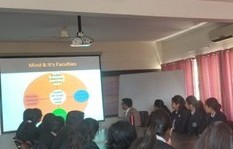
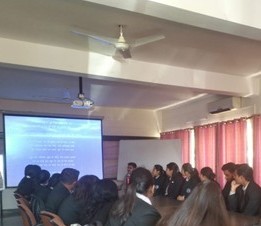
On 11th February 2025, the Department of Clinical Research at the Himalayan Institute of Medical Sciences, Swami Rama Himalayan University, hosted an insightful lecture titled “Silencing the Inner Chatter: How to Control the Monkey Mind,” conducted by Honourable President Dr. Vijay Dhasmana. The session brought together 21 students at the RDI venue to explore the pervasive issue of mental restlessness and distraction commonly referred to as the “Monkey Mind.”

Dr. Dhasmana explained how the constant mental chatter disrupts focus, productivity, and emotional balance. Drawing inspiration from Swami Rama’s teachings, he emphasized meditation and mindfulness as effective tools to quiet the restless mind. Participants were guided on techniques to observe their thoughts non-judgmentally and cultivate detachment, leading to greater self-awareness and mental peace.

The session also highlighted practical strategies for being present in the moment, managing scattered thoughts, and enhancing concentration amid today’s fast-paced lifestyle. The interactive lecture was well-received, with students expressing appreciation for the clarity and calm the techniques promised. This session provided valuable mental well-being tools to help participants foster emotional stability and reduce internal distractions, empowering them to lead more focused and balanced lives.
Picture1
Picture2
   Admissions Form         

Admission Open For 2025

×
International Endowed Chair Professor

Prof Rakesh Kumar

Prof Rakesh Kumar is the Founder and President of the Breast Cancer in Young Women Foundation (USA), dedicated to vaddressing the distinct issues affecting young women with breast cancer. He also serves as the International Endowed Chair Professor at the Cancer Research Institute of the Himalayan Institute of Medical Sciences. Additionally, he holds adjunct professorships at Rutgers New Jersey Medical School and Virginia Commonwealth University.

Dr Kumar earned his Ph.D. from the All India Institute of Medical Sciences in 1984 and began his research career at Memorial Sloan Kettering Cancer Center in January 1986. From 1988 to 2017, he held various academic and leadership positions —including faculty member, tenured professor, distinguished professor, endowed chair, department chair, and research leader—at esteemed institutions such as Memorial Sloan Kettering Cancer Center in New York and the University of Texas MD Anderson Cancer Center in Houston. From 2017 to 2022, he served as the National Chair for Cancer Research for the Government of India and as a distinguished professor, continuing his innovative work in breast cancer research.

With nearly 40 years of research and professional experience, Dr. Kumar has made conceptual contributions to the field of cancer research (h-index 108, citations >50,000). He has authored over 325 peer-reviewed publications, edited or co-edited nine books, and delivered 290 invited lectures worldwide. His work has been featured on the covers of 18 major cancer journals and has been highlighted in institutional research reports of the MD Anderson Cancer Center.

A passionate educator and mentor, Dr. Kumar has guided 67 trainees throughout his career. He serves on the editorial boards of multiple leading cancer journals and has served on the editorial boards of 21 top cancer journals. His global reputation is further demonstrated by his participation in about 100 peer-review panels for cancer research funding in the US and internationally over the past 28 years.

Dr. Kumar's innovative research has earned him numerous prestigious honors, including the Hinkle Society Faculty Award at Penn State University (1994), the Dalla/Fort Worth Living Legend Faculty Achievement Award in Basic Sciences (2004), the Ranbaxy Research Award (2006), and the Lifetime Achievement Award from the American Association of Indian Scientists in Cancer Research (2013), among others. Dr. Kumar's pioneering research continues to have a profound influence on the fields of oncology and breast cancer, opening up new opportunities for biomedical scientists and trainees worldwide.