Published on: April 22, 2026
Swami Rama Himalayan University (SRHU) recently hosted Prof. Chandrika Parmar, Head of UNPRME India and Director of the Development of Corporate Citizenship (DoCC) at SPJIMR Mumbai, for a comprehensive two-day campus visit. The visit served as a valuable platform to showcase SRHU’s rich institutional legacy and the impactful grassroots initiatives led by the Rural Development Institute (RDI). It also reinforced the School of Management Studies’ (SMS) aspiration to emerge as a premier B-school committed to integrating responsible management practices and the Sustainable Development Goals (SDGs) into its academic framework.
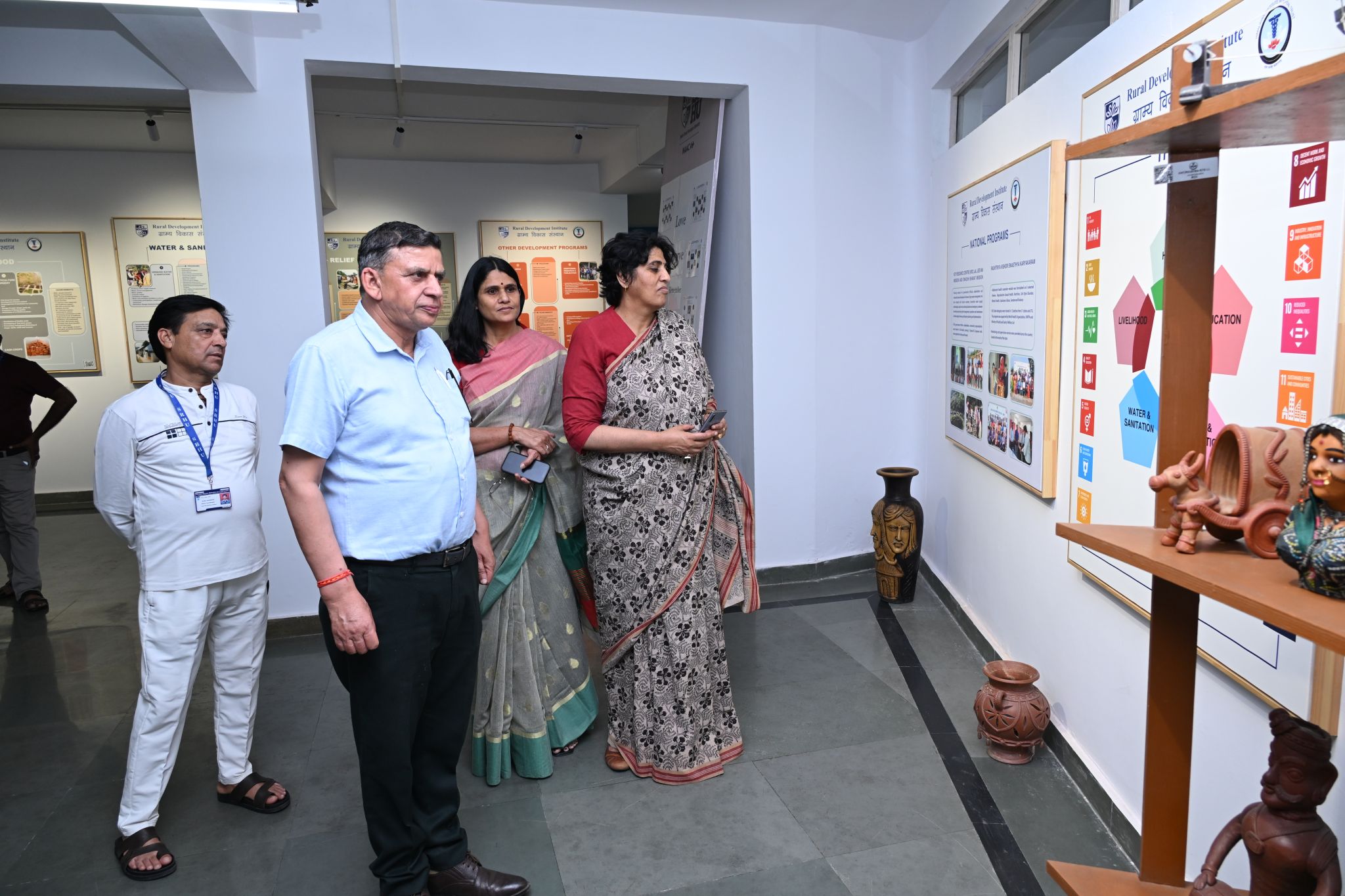
The visit began with an immersive campus tour, allowing Prof. Parmar to experience the serene and strategically located SRHU campus, which blends modern educational infrastructure with a deep-rooted heritage of holistic wellness. A key highlight was her interaction with the Rural Development Institute, where she was introduced to the transformational work being undertaken across rural Uttarakhand. Discussions focused on community-driven health and socio-economic empowerment initiatives, the tangible on-ground impact of RDI’s projects in remote Himalayan regions, and potential avenues for research and development collaboration, particularly linking RDI’s field expertise with initiatives such as SPJIMR’s Centre for Impact in Sustainable Development.
The second day focused on strategic academic engagement and institutional dialogue. Prof. Parmar participated in discussions with university leadership on the evolving landscape of management education in India and the importance of embedding sustainability within institutional strategies. The dialogue explored ways for SRHU to continue aligning its academic growth with global priorities such as net-zero goals and the principles of the circular economy.
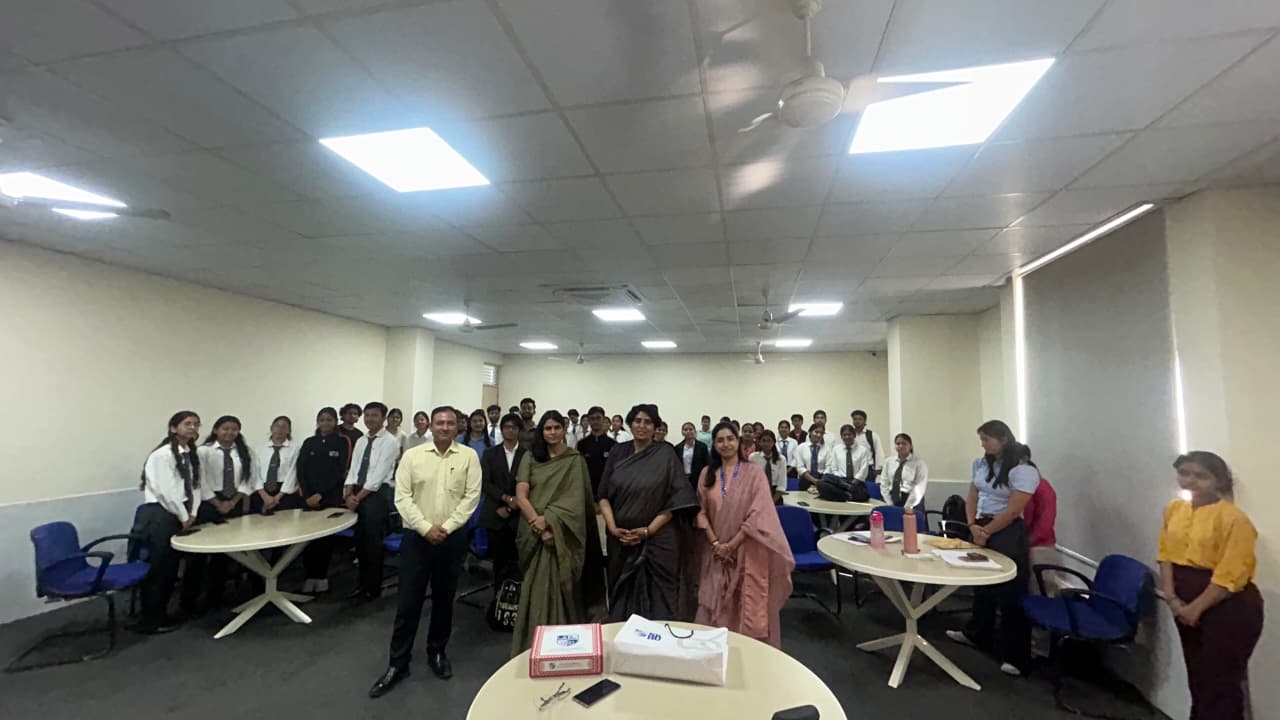
An interactive session was also held with faculty members and students of the School of Management Studies. During the interaction, Prof. Parmar shared insights on the growing significance of sustainability within Indian B-schools and discussed how concepts such as corporate citizenship and the Triple Bottom Line are shaping contemporary business practices. The session offered students a broader perspective on responsible leadership and the role of management education in addressing global challenges.
The visit marks an important step for the School of Management Studies as it continues to strengthen its vision of becoming a leading business school recognized for responsible management education. By seeking meaningful collaborations with national and global leaders such as UNPRME, the school is expanding its academic outlook beyond conventional frameworks and preparing students to become leaders who are not only professionally competent but also socially and environmentally conscious.
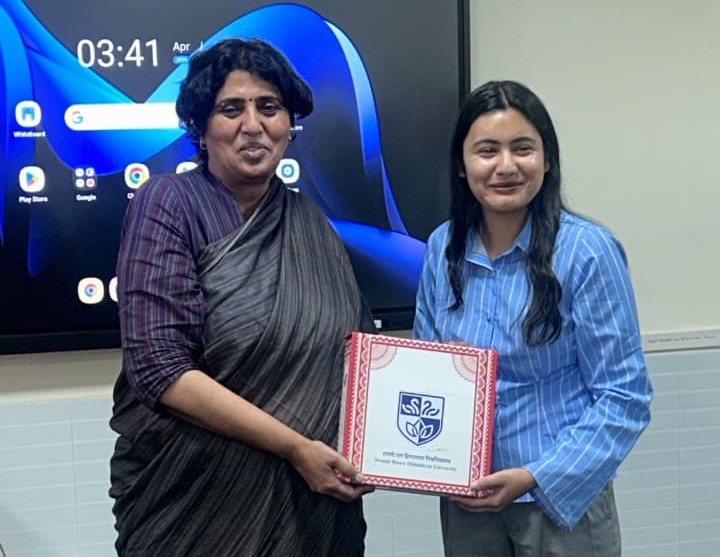
Prof. Chandrika Parmar’s visit proved to be highly enriching for the university community. It acknowledged the impactful work being carried out through the Rural Development Institute and created momentum within the academic ecosystem of SMS. The engagement has laid a strong foundation for future collaboration, further reinforcing SRHU’s commitment to education that contributes to meaningful and sustainable societal impact.