
PhD in Yoga Admissions 2026 at SRHU: Advance Your Research in Yoga Science
November 10, 2025 2025-12-10 4:27PhD in Yoga Admissions 2026 at SRHU: Advance Your Research in Yoga Science

PhD in Yoga Admissions 2026 at SRHU: Advance Your Research in Yoga Science
Yoga is no longer just a wellness practice-it is one of the fastest-growing academic and scientific research fields in the world. As we enter 2026, the demand for evidence-based yoga professionals and research scholars is higher than ever, driven by global interest in integrative health, yoga therapy, mental well-being, and preventive medicine.
For scholars seeking to contribute meaningfully to this evolution, Swami Rama Himalayan University (SRHU) offers one of India’s most rigorous and respected doctoral pathways in Yoga. With the 2026 PhD admission cycle now open, this is the ideal moment to apply.
Why Pursue a PhD in Yoga? A Future-Driven Academic Path
The last few years have transformed yoga from a lifestyle choice to a cornerstone of global wellness. Today, institutions, healthcare systems, and research bodies are looking for experts who combine ancient yogic knowledge with modern scientific evidence.
Key global trends shaping the field in 2024-2025 include:
- The global yoga market is projected to reach USD 125-130 billion by 2025, driven by therapy, digital growth, and wellness tourism.
- The global wellness economy reached USD 5.6 trillion in 2024 and is projected to hit USD 8.5 trillion by 2027 (Global Wellness Institute).
- Yoga therapy adoption is increasing in hospitals, rehabilitation centers, mental health ecosystems, and public health initiatives.
- India’s AYUSH sector is expected to cross USD 50 billion by 2025, solidifying yoga’s role in healthcare, research, and global wellness diplomacy.
These shifts signal a powerful reality: Advanced research in yoga is no longer optional-it is essential.
SRHU’s PhD in Yoga: Where Yogic Wisdom Meets Scientific Depth
Swami Rama Himalayan University stands uniquely positioned at the intersection of yogic tradition and modern scientific inquiry.
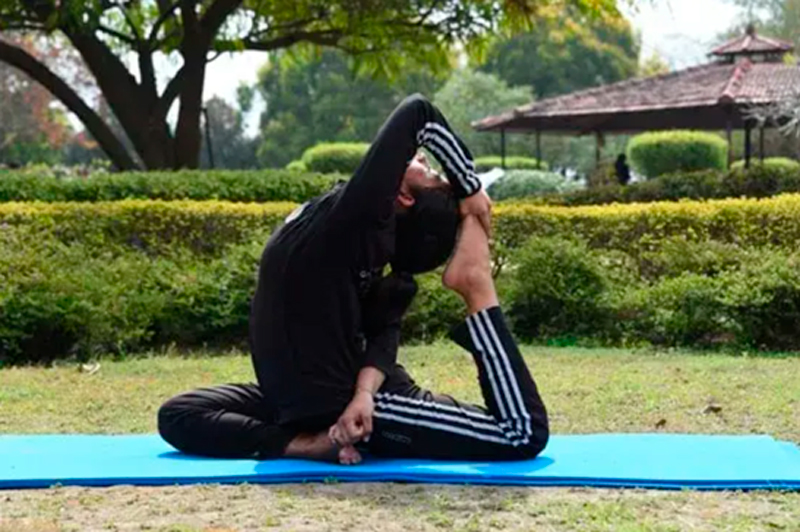
1. Dedicated School of Yoga Sciences
SRHU offers a specialized ecosystem for advanced study with access to:
- Yoga research laboratories
- Therapy and rehabilitation facilities
- Clinical departments across medicine & physiology
- Biomedical research infrastructure
- On-campus hospitals for applied research
This allows Yoga PhD scholars to explore integrative, therapeutic, psychological, and biomedical dimensions of yoga-rarely found in typical yoga institutions.
2. A Vibrant Research Culture
With 20+ active PhD scholars (including UGC-JRF recipients), SRHU fosters a community where meaningful research thrives. Areas of inquiry include:
- Yoga for chronic disease management
- Mind-body interventions for mental health
- Meditation and neurophysiology
- Integrative therapy models
- Lifestyle medicine & preventive health
Here, scholars don’t just study yoga-they contribute to the future of yoga science.
3. Accessible & Structured Doctoral Pathway
SRHU’s PhD programme is academically rigorous yet structured to support scholars with:
- Affordable fees
- Access to faculty mentors
- Interdisciplinary project opportunities
- Research collaborations with clinical departments
- Exposure to both traditional and modern scientific methodologies
4. The Growing National Momentum for Yoga Research

India is witnessing a surge in doctoral-level yoga research across multiple universities. This nationwide growth indicates:
- Rising academic interest,
- Expanding opportunities,
- and recognition of yoga as a serious scientific discipline.
However, SRHU continues to stand out due to:
- its deep clinical integration,
- hospital-based research pathways,
- interdisciplinary focus,
- and strong yogic lineage rooted in the Himalayan tradition.
India may offer multiple PhD options in yoga- but SRHU elevates the discipline with scientific precision and therapeutic relevance.
5. Why 2025–2030 Is the Best Time to Enter a PhD in Yoga
The next decade will define a new era for integrative health, and yoga research will be central to it.
Key 2024-2025 Research Trends Driving Demand:
- Yoga therapy is among the top globally adopted complementary health practices.
- The digital yoga and tele-therapy market is expanding at over 10% CAGR.
- Wellness tourism-valued at USD 600+ billion-relies heavily on yoga, meditation, and holistic therapies.
- Preventive health and lifestyle medicine sectors are integrating yoga as a frontline tool.
For scholars, this translates to:
- Increasing fellowship & funding opportunities
- Research relevance across healthcare & public policy
- Strong career pathways in academia, therapy, hospital systems, and wellness science
- Opportunities to shape global evidence-based yoga protocols
2026 is a pivotal year to begin, with the global wellness industry primed for exponential growth over the next 5-10 years.
Conclusion: A Doctoral Journey That Creates Impact
A PhD in Yoga from SRHU is more than a doctoral qualification. It is:
- a pathway to global scientific contribution,
- a bridge between ancient wisdom and modern evidence,
- a foundation for leadership in integrative health,
- and a commitment to elevating the world’s understanding of yoga.
For those passionate about research, wellness, and societal impact- SRHU offers one of India’s strongest, most future-ready PhD programmes in Yoga.