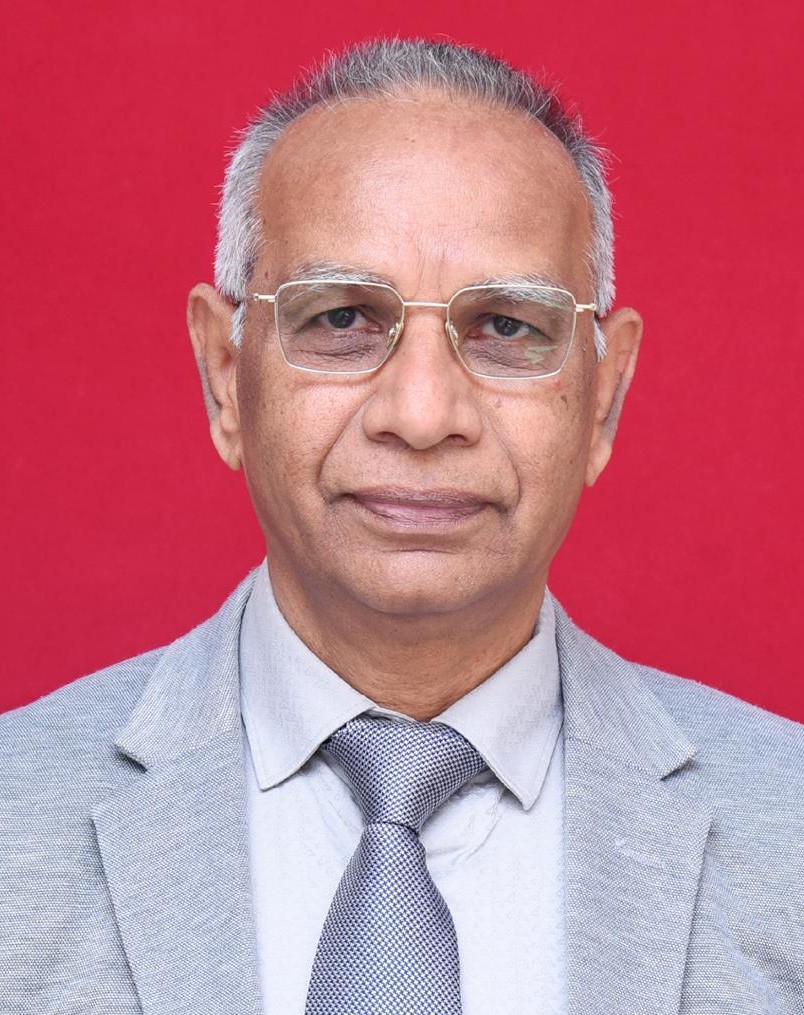
Dean– Himalayan Institute of Medical Sciences (HIMS)
Dr A Shariff has been appointed Dean and Head of the Himalayan Institute of Medical Sciences (HIMS), SRHU, after an illustrious 35-year career at AIIMS, New Delhi, where he served as Professor and Head, Department of Anatomy. An alumnus of JIPMER, he completed his MBBS (1986) and MS Anatomy (1989). He joined AIIMS in 1990 and became Professor in 2010, later leading the Department of Anatomy until August 2025.
Dr Shariff has also held international leadership roles as Professor & Head of Anatomy at B.P. Koirala Institute of Health Sciences, Nepal, and Oman Dental College, Muscat. His research spans Clinical Ecotoxicology, the Enteric Nervous System, Developmental Biology, and Digital Health & Telemedicine, with research funding exceeding ₹3.5 crores from DST and ICMR.
He established India’s first Clinical Ecotoxicology Research & Diagnostic Facility at AIIMS and pioneered a Digital Histology Laboratory enabling remote medical learning during the COVID-19 pandemic. His work on fluoride toxicity, heavy metals, and disease pathology has been widely published in international journals.
A life member of the Anatomical Society of India and Telemedicine Society of India, Dr. Shariff also contributes to national policy bodies including ICMR and MeitY. He has been recognized by The Economic Times for his leadership in digital health innovation.
Prof Rakesh Kumar is the Founder and President of the Breast Cancer in Young Women Foundation (USA), dedicated to vaddressing the distinct issues affecting young women with breast cancer. He also serves as the International Endowed Chair Professor at the Cancer Research Institute of the Himalayan Institute of Medical Sciences.
Additionally, he holds adjunct professorships at Rutgers New Jersey Medical School and Virginia Commonwealth University.
Dr Kumar earned his Ph.D. from the All India Institute of Medical Sciences in 1984 and began his research career at Memorial Sloan Kettering Cancer Center in January 1986. From 1988 to 2017, he held various academic and leadership positions —including faculty member, tenured professor, distinguished professor, endowed chair, department chair, and research leader—at esteemed institutions such as Memorial Sloan Kettering Cancer Center in New York and the University of Texas MD Anderson Cancer Center in Houston. From 2017 to 2022, he served as the National Chair for Cancer Research for the Government of India and as a distinguished professor, continuing his innovative work in breast cancer research.
With nearly 40 years of research and professional experience, Dr. Kumar has made conceptual contributions to the field of cancer research (h-index 108, citations >50,000). He has authored over 325 peer-reviewed publications, edited or co-edited nine books, and delivered 290 invited lectures worldwide. His work has been featured on the covers of 18 major cancer journals and has been highlighted in institutional research reports of the MD Anderson Cancer Center.
A passionate educator and mentor, Dr. Kumar has guided 67 trainees throughout his career. He serves on the editorial boards of multiple leading cancer journals and has served on the editorial boards of 21 top cancer journals. His global reputation is further demonstrated by his participation in about 100 peer-review panels for cancer research funding in the US and internationally over the past 28 years.
Dr. Kumar's innovative research has earned him numerous prestigious honors, including the Hinkle Society Faculty Award at Penn State University (1994), the Dalla/Fort Worth Living Legend Faculty Achievement Award in Basic Sciences (2004), the Ranbaxy Research Award (2006), and the Lifetime Achievement Award from the American Association of Indian Scientists in Cancer Research (2013), among others. Dr. Kumar's pioneering research continues to have a profound influence on the fields of oncology and breast cancer, opening up new opportunities for biomedical scientists and trainees worldwide.