
Swami Rama Himalayan University (SRHU) is actively contributing to the achievement of clean water and sanitation through innovative, educational, and community-based initiatives. Recognizing global challenges such as water scarcity, pollution, inadequate infrastructure, and governance issues, SRHU addresses these through sustainable practices, research, infrastructure development, and awareness initiatives aligned with SDG 6.
At SRHU, a robust set of water conservation initiatives is in place to reduce water usage, enhance sustainability, and preserve water resources for future generations. These include rainwater harvesting, groundwater recharge, installation of waterless urinals, and innovative water-use systems in toilets and campus facilities.
Water Management Details
| Financial Year | Horsepower of all pumps installed | Rooftop Area connected to Rainwater Harvesting (RWH) | Percentage of Wastewater Treated & Reused (approx.) | Total no of Taps in the Campus | No of Taps installed with low-Flow fixtures | Total Rooftop Area |
|---|---|---|---|---|---|---|
| HP | Sq.ft. | % | Number | Number | Sq.ft. | |
| 2024-25 | 120 | 175714.13 | 100 | 4596 | 4145 | 855824.45 |
| 2023-24 | 120 | 175714.13 | 100 | 3615 | 3181 | 750121.44 |
| 2022-23 | 120 | 175714.13 | 100 | 3294 | 2897 | 750121.44 |
Key Projects Implemented under SRHU’s RDI
- A dedicated Water & Sanitation Resource Centre supported by IRC, Netherlands
- Participation in the Swajal Sector Reform Program (SWAp)
- Implementation of the Himmothan Pariyojana with Tata–Titan and the Hans Foundation
- Execution of Nirmal Bharat Abhiyan / Total Sanitation Campaign
- Contributions to the Urban Sector Development Investment Program
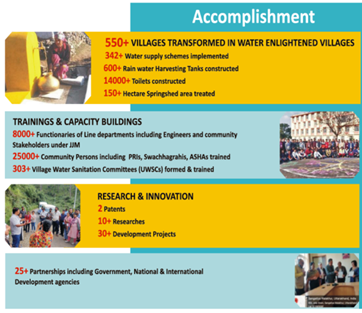
National Recognition
Through its flagship institution—the Himalayan Institute Hospital Trust (HIHT)—SRHU has earned national recognition. The Ministry of Jal Shakti, Government of India, has empanelled HIHT to undertake CSR projects, ranking it 4th nationally and making it the only organisation from Uttarakhand on the list.
Additionally, HIHT has been designated as a National Key Resource Center (NKRC) under the Swachh Bharat Mission (Gramin), underscoring SRHU’s leadership in strengthening rural WASH systems aligned with national priorities.
The university monitored its daily water consumption using IoT-enabled IoSense. The annual water consumption of the university during 2024-2025 was 325713 m³, with a total campus population (Full-Time Equivalent, FTE) of 9862.
Water Consumption Year: 2024-25
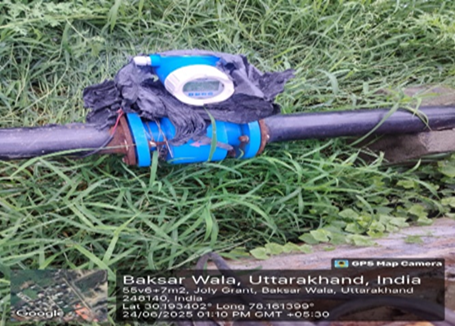
The University has established comprehensive and transparent water-consumption monitoring aligned with CGWA standards. A water-consumption measurement and monitoring system is in place across the campus to record water-use data. The system captures real-time water-use data across the full campus using telemetry-enabled piezometers, supplemented by government-supplied water data. With publicly available information through IoSense, SRHU demonstrates a strong institutional commitment to sustainable water resource management and transparent reporting. The average per-capita water consumption is 86 L/FTE/day, corresponding to an average annual consumption of 31 m³/FTE/year, based on the total annual water consumption of 325713 m³ for a total FTE population of 9,862.
At present, one IoSense monitoring units and two piezometers equipped with telemetry have been installed on campus to continuously monitor groundwater levels.
The monitoring system provides documented and verifiable evidence of water consumption and groundwater monitoring. Relevant monitoring data and supporting evidence are publicly available through the University's official website, ensuring transparency and facilitating independent verification. This demonstrates the University's institutional commitment to sustainable water-resource management, continuous monitoring, and transparent reporting.
Daily Tubewell Water Extraction and Water Supply from Municipal Sources
| Sl. No. | Volume of Water Used in the University | Quantity |
|---|---|---|
| 1 | Recorded groundwater level (2024-25) | 68.45 m |
| 2 | Daily water withdrawal from Tubewells | 1294 m³ |
| 3 | Fresh water supplied through the municipal water supply system | 50 m³ |
Annual Water Intake (in Cubic Meters) from Various Sources at SRHU for the Year 2024-25
| Sl. No. | Volume of Water Used in the University | Quantity (m³) |
|---|---|---|
| 1 | Municipal water supply (UJS) | 10950 |
| 2 | Total Ground Water Withdrawal from Tubewells | 314763 |
| 3 | Tubewell 1 | 48555 |
| 4 | Tubewell 2 | 183266 |
| 5 | Tubewell 3 | 82942 |
| Grand Total | 325713 |
Annual Water Consumption for Swami Rama Himalayan University During 2024-2025
| Year | Annual Water Consumption | Serving Population | |
|---|---|---|---|
| Quantity (m³) | Source of Water | ||
| Institutional / Domestic Use | |||
| 2024-25 | 325713 | Tube well & municipal supply | Students 4314 (1213 hostellers + 3101 day scholars), Faculty 342, staff- 2800 and resident Population- 1193 |
| Particulars | Status | Details |
|---|---|---|
| Existence of Measurement | Yes | Piezometers Installed and IoSense is in place |
| Is the evidence Provided | Yes | Images of Piezometers, Tube well and EM Flow meter provided |
| Is the evidence in public domain | Yes | Data available in IoSense portal |
Volume of Water Used in the University: Inbound (Treated or Extracted Water)
Main source of water in SRHU are tube wells and municipal supply. The percentage of municipal supply is very low. The University records 325713m³ of total inbound water for 2024-25 (including treated and extracted sources), monitored in real time through telemetry-based piezometers. All water sources comply with CGWA guidelines and BIS 10500 potable water standards, ensuring sustainable and safe usage across the entire campus serving over 9862 people daily.
Campus Population: Campus population covers employees, students and employee families residing in the University campus (Total -9862).
Details of Daily and Annual Water Consumption at the University for 2024-25
| S. No. | Detail | Population | Per FTE/Year Consumption (m³/year) | Total Water Consumption (m³/year) |
|---|---|---|---|---|
| 1 | Students | 4,314 | 21 | 90,915 |
| 2 | Faculty | 342 | 21 | 7,207 |
| 3 | Hostelers | 1,213 | 63 | 76,756 |
| 4 | Staff | 2,800 | 21 | 59,058 |
| 5 | Residential Population | 1,193 | 63 | 75,491 |
| Total | 9,862 | 309,427 |
Academic Unit-Wise, Administrative & Residential Water Consumption
- Student FTE: 4312 Students (Hosteler 1213 + Day’s scholar 3101)
- Faculty FTE: 342 Faculties
- Staff FTE: 2800
- Institute resident Residential FTE: 1193 residential population
- Total FTE: 4427+343+1289+1193 (9862 FTE)
Per Unit Per Month Water Consumption (m³)
Source of Water Supply: Tube wells / Municipal supply
| Sl. No. | Academic Unit | FTE | Jan | Feb | Mar | Apr | May | Jun | Jul | Aug | Sep | Oct | Nov | Dec | Annual Consumption (m³) |
|---|---|---|---|---|---|---|---|---|---|---|---|---|---|---|---|
| 1 | Himalayan College of Nursing | 792 | 1,469 | 1,468 | 1,468 | 1,468 | 1,468 | 1,100 | 1,100 | 1,468 | 1,468 | 1,468 | 1,468 | 1,284 | 16,697 |
| 2 | Himalayan Institute of Medical Sciences | 3,374 | 6,256 | 6,256 | 6,256 | 6,256 | 6,256 | 4,691 | 4,691 | 6,255 | 6,255 | 6,255 | 6,254 | 5,473 | 71,154 |
| 3 | School of Biosciences | 372 | 691 | 691 | 691 | 691 | 691 | 517 | 516 | 690 | 690 | 690 | 690 | 604 | 7,852 |
| 4 | School of Management Studies | 553 | 1,027 | 1,027 | 1,026 | 1,026 | 1,026 | 769 | 769 | 1,025 | 1,025 | 1,025 | 1,025 | 897 | 11,667 |
| 5 | School of Pharmaceutical Sciences | 124 | 231 | 230 | 230 | 230 | 230 | 172 | 172 | 229 | 229 | 229 | 229 | 201 | 2,612 |
| 6 | School of Science and Technology | 754 | 1,399 | 1,399 | 1,399 | 1,399 | 1,399 | 1,048 | 1,048 | 1,399 | 1,398 | 1,398 | 1,398 | 1,223 | 15,907 |
| 7 | School of Yoga Science | 237 | 441 | 440 | 440 | 440 | 440 | 330 | 330 | 440 | 440 | 439 | 439 | 385 | 5,004 |
| 8 | Administrative Buildings | 1,250 | 2,192 | 2,191 | 2,191 | 2,191 | 2,191 | 2,191 | 2,191 | 2,191 | 2,190 | 2,190 | 2,190 | 2,190 | 26,289 |
| 9 | Residential Area | 1,193 | 6,291 | 6,291 | 6,291 | 6,291 | 6,291 | 6,291 | 6,291 | 6,291 | 6,291 | 6,291 | 6,291 | 6,290 | 75,491 |
| 10 | Hostels | 1,213 | 7,141 | 7,141 | 7,140 | 7,140 | 7,140 | 3,569 | 3,569 | 7,140 | 7,140 | 7,140 | 7,139 | 5,355 | 76,754 |
| Total | 9,862 | 27,138 | 27,134 | 27,132 | 27,132 | 27,132 | 20,678 | 20,677 | 27,128 | 27,126 | 27,125 | 27,123 | 23,902 | 309,427 |
Academic Unit Wise Per Capita Consumption
| Sl. No. | Academic Unit | FTE | Per FTE per Day Consumption (L/D) | Per FTE per Year Consumption (m³) | Annual Consumption (m³) |
|---|---|---|---|---|---|
| 1 | Himalayan College of Nursing | 792 | 58 | 21 | 16,697 |
| 2 | Himalayan Institute of Medical Sciences | 3,374 | 58 | 21 | 71,154 |
| 3 | School of Biosciences | 372 | 58 | 21 | 7,852 |
| 4 | School of Management Studies | 553 | 58 | 21 | 11,667 |
| 5 | School of Pharmaceutical Sciences | 124 | 58 | 21 | 2,612 |
| 6 | School of Science and Technology | 754 | 58 | 21 | 15,907 |
| 7 | School of Yoga Science | 237 | 58 | 21 | 5,004 |
| 8 | Administrative Buildings | 1,250 | 58 | 21 | 26,289 |
| 9 | Residential Area | 1,193 | 173 | 63 | 75,491 |
| 10 | Hostels | 1,213 | 173 | 63 | 76,754 |
| Total | 9,862 | 309,427 |
Water Infrastructure & Treatment Systems
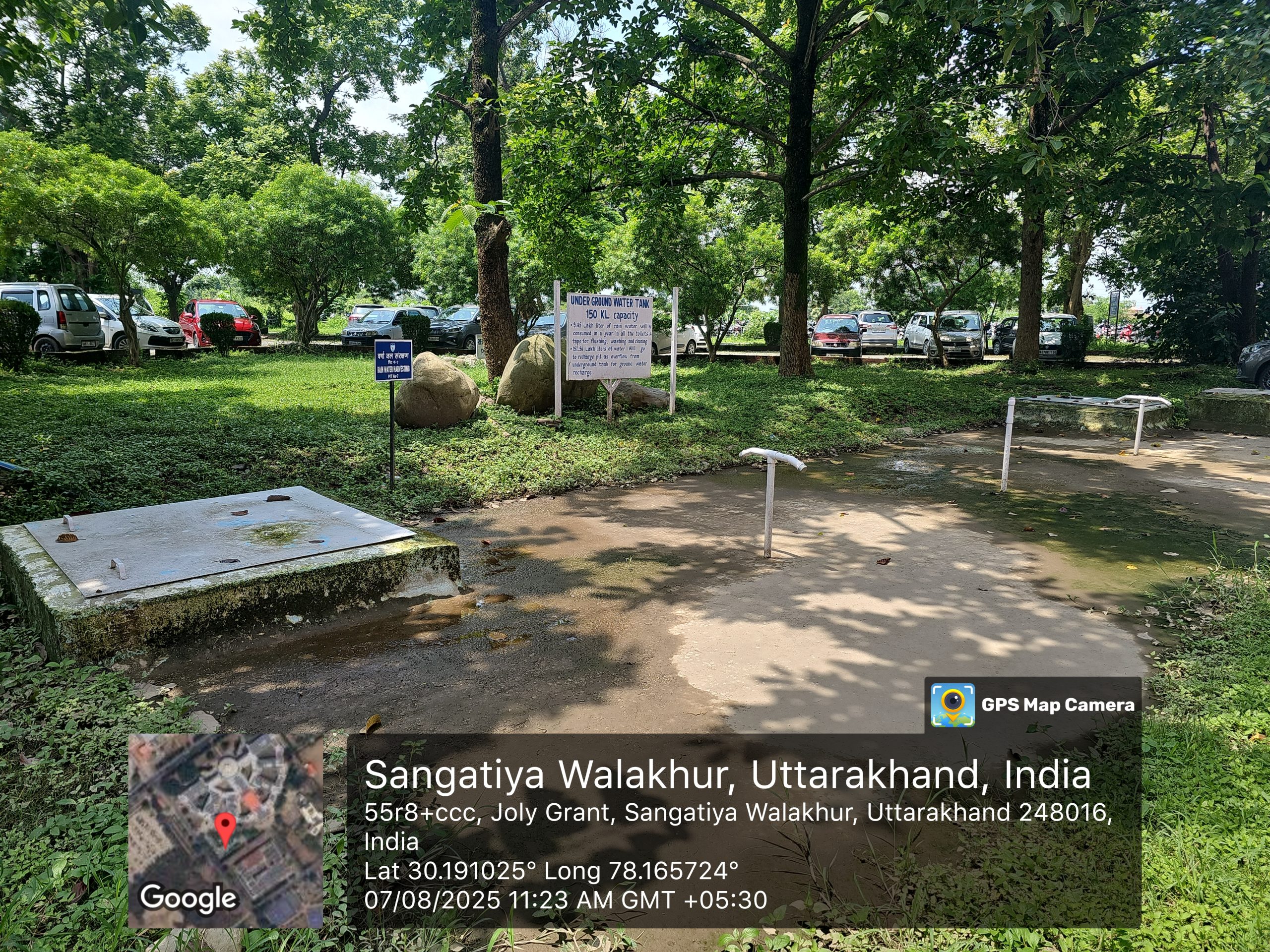
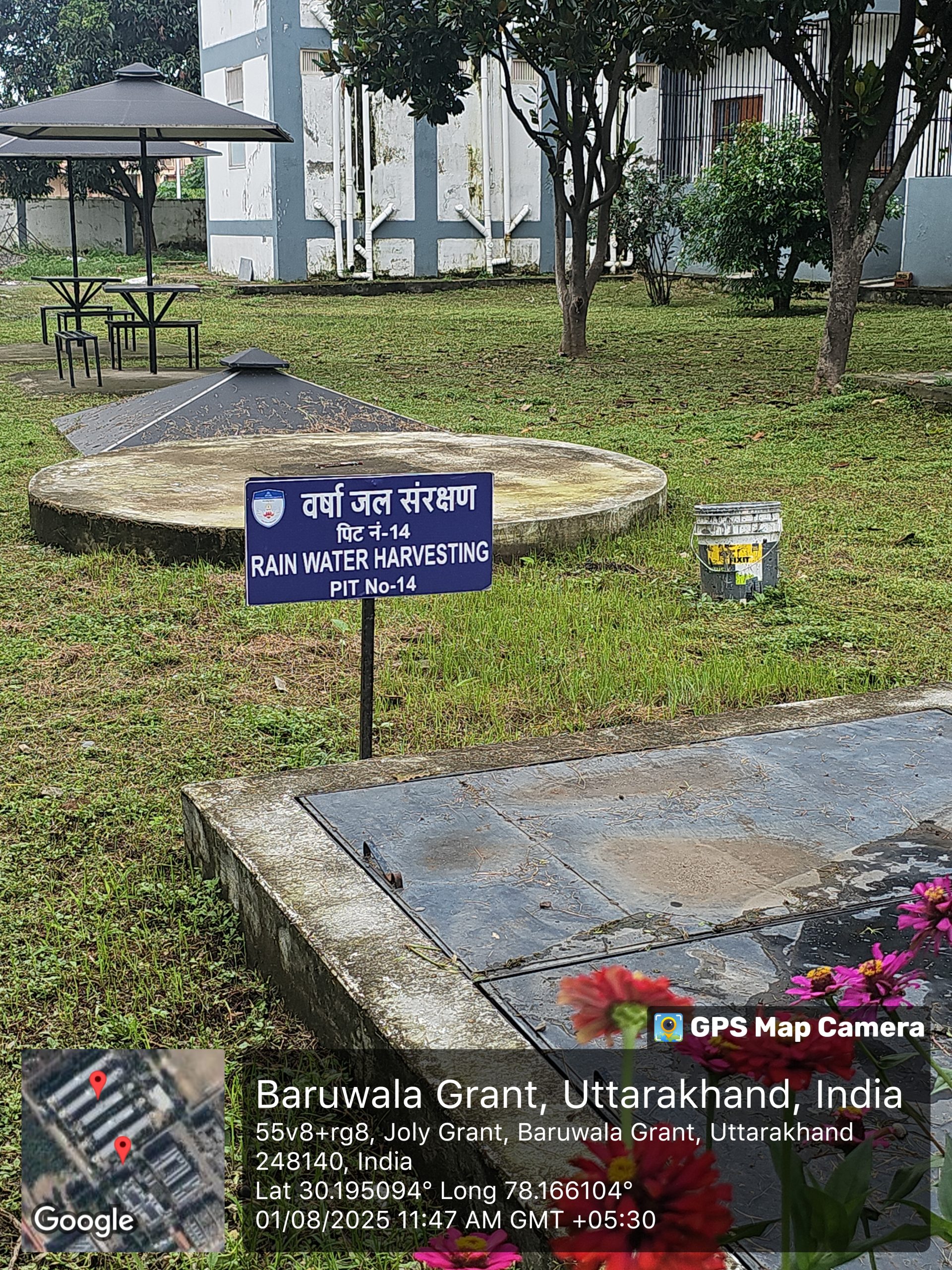
SRHU receives an annual rainfall of 2073.3 mm, harnessed through a well-planned rainwater harvesting system. Rainwater collected from rooftops, paved roads, open areas, and green belts contributes to an annual harvesting potential of 3,77,892.7 cubic meters.
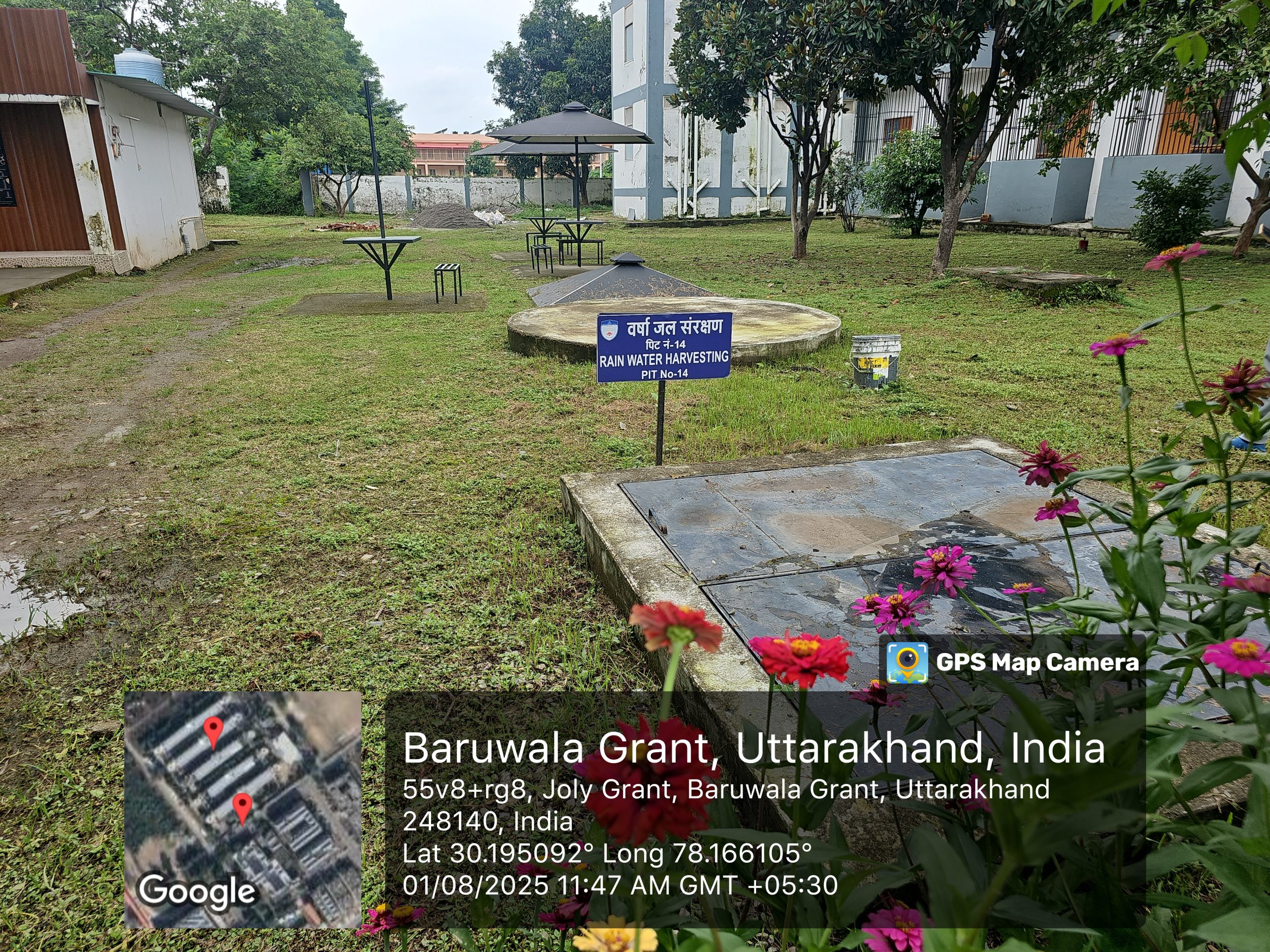
To complement this, the University has constructed 13 recharge pits and 2 borewell recharge structures, contributing 796.73 cubic meters of groundwater recharging.
- Total rainwater harvesting capacity: 40 crore litres
- Underground tank capacity: 1.5 lakh litres
- Daily reuse from tank: 3,000 litres for 111 toilets & 138 taps
- Total rooftop area utilised: 9,000 sq. meters
- Annual groundwater recharge from harvested water: 1.57 crore litres
- Rainwater used for flushing and cleaning: 9.45 lakh litres/year
- Key recharge pit specifications:
- Guest House Area: 3 pits with filter beds (6.42×2×1.5 m), recharge depth: 6 m
- New OPD Zone: Multiple pits of 3 m diameter × 12 m depth
- Medical College (SBI Bank): Filtration system with 3 m diameter × 3.35 m depth
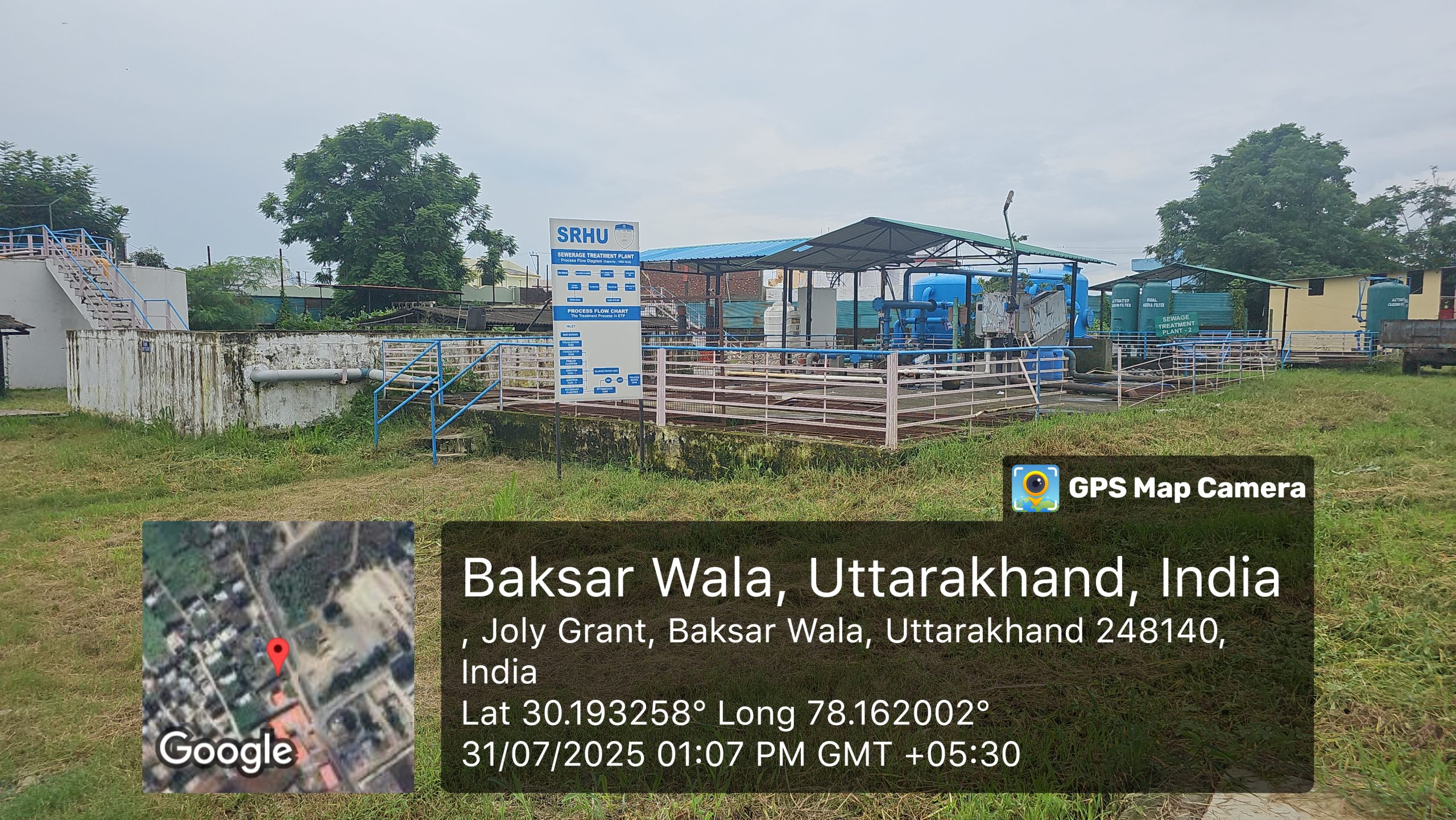
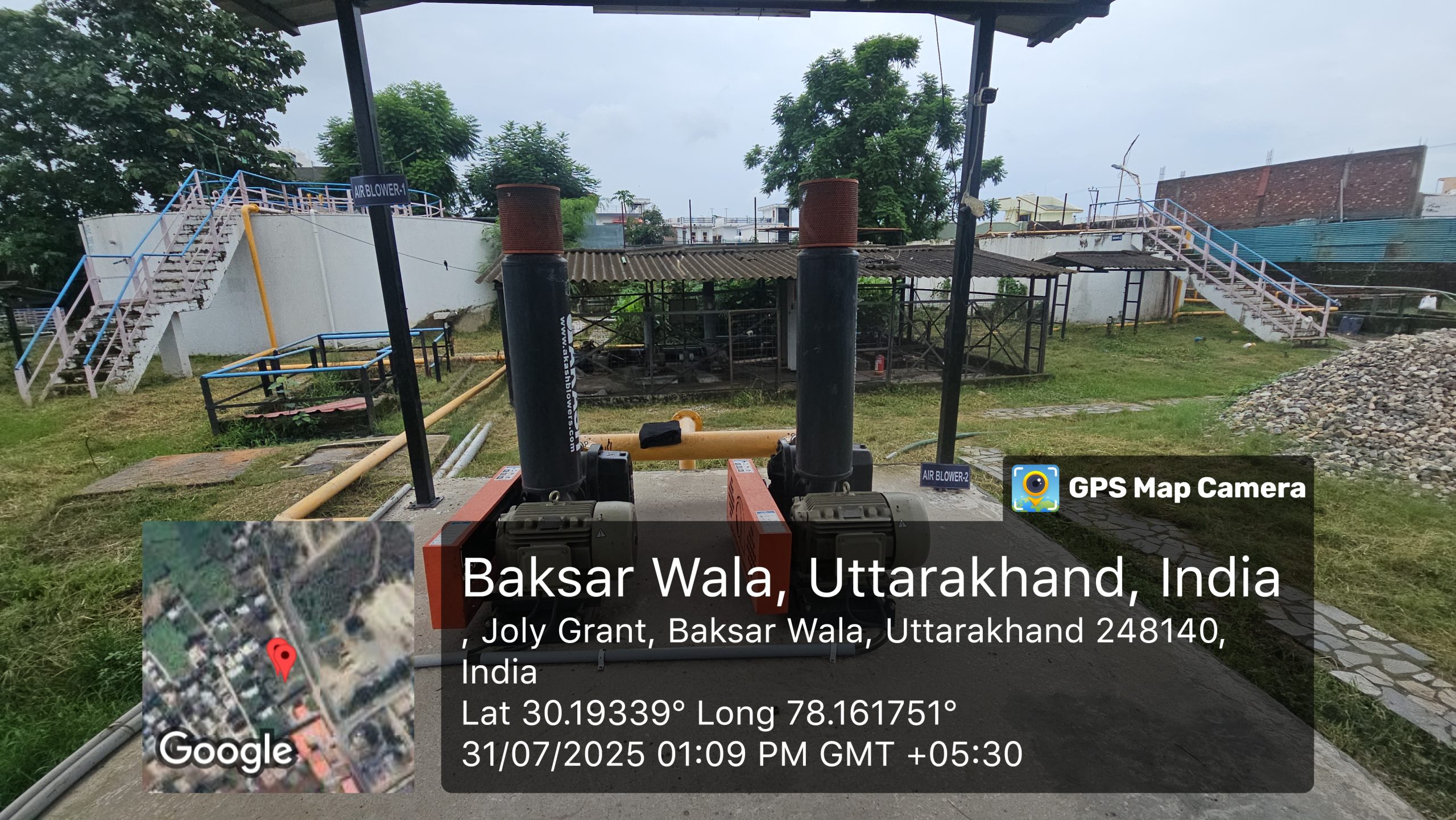
The University has established a comprehensive wastewater management framework ensuring safe treatment, recycling, and reuse of domestic sewage and industrial effluents.
- Capacity: 1 MLD (10,00,000 litres/day)
- Technology: MBBR with extended aeration and tertiary filtration
- Construction Cost: ₹1.25 crore
- Daily Average Treatment: 7,00,000 litres
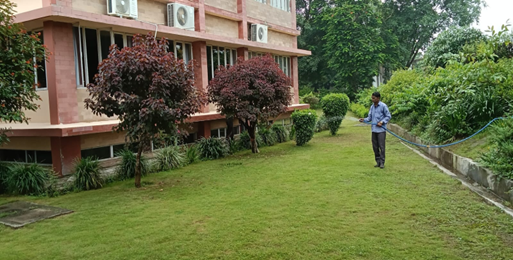
Water Reuse – 9,43,153 litres annually:
- Green belt irrigation (1,60,800 sqm)
- Construction activities
- Vehicle washing
Additional Sustainability Measures:
- Sludge processed and reused as organic manure
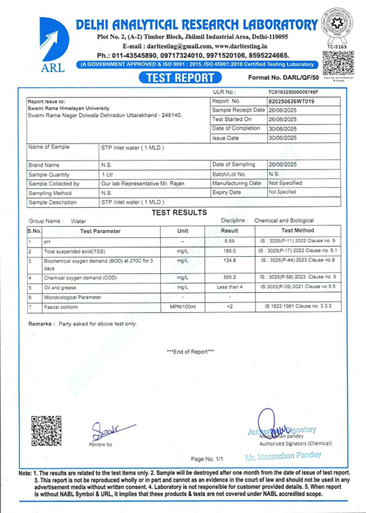
- Treated water tested biannually at NABL-accredited labs
- Results within norms (pH: 7.15, BOD: 9 mg/L, COD: 39.7 mg/L, Fecal Coliform: <80 MPN/100ml)
- Fully compliant with State Pollution Control Board regulations
- Capacity: 90,000 litres/day
- Purpose: Clinical and laboratory effluent treatment
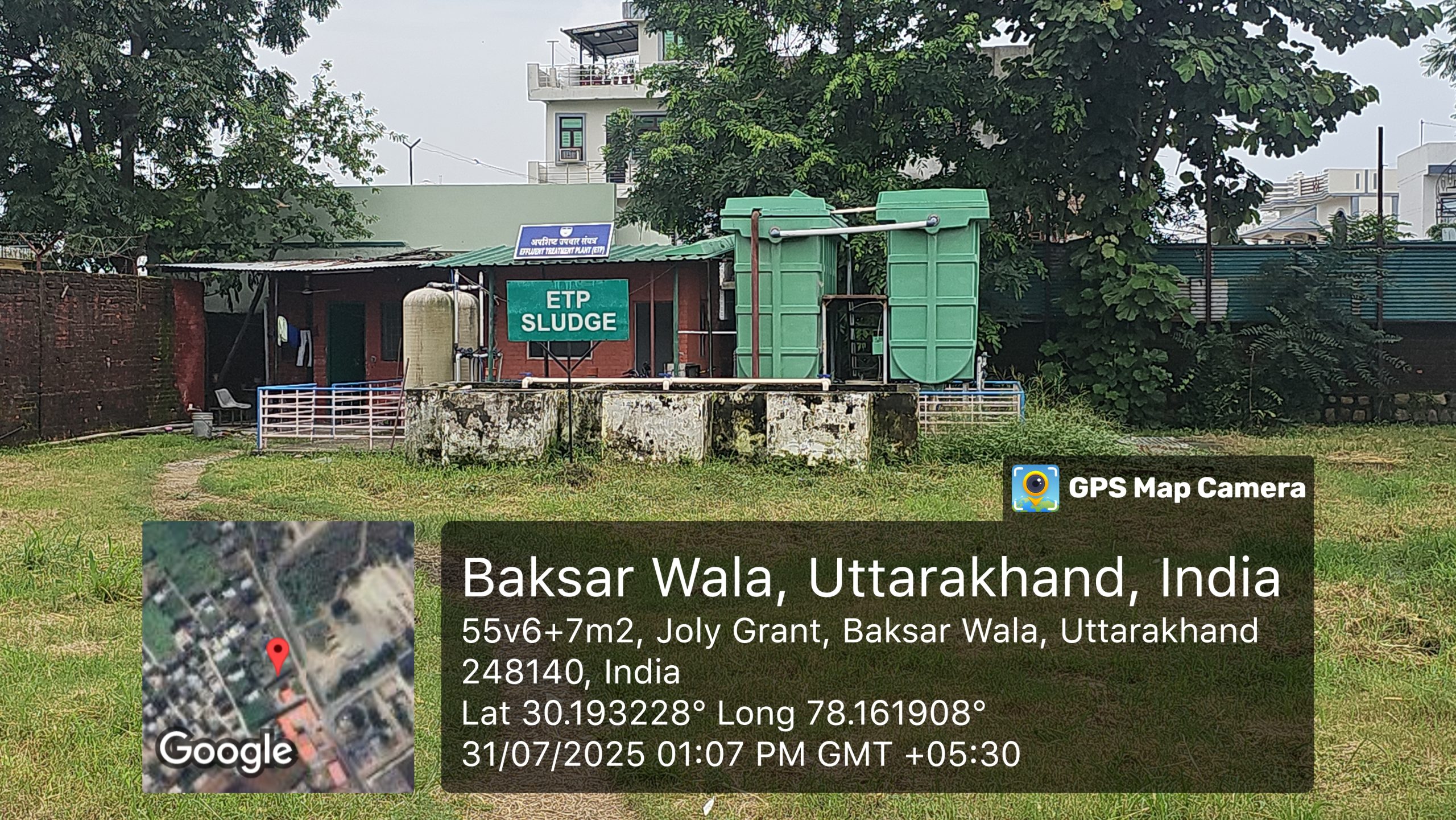
Process Highlights:
- Equalization, coagulation, neutralization, aeration, clarification
- Tertiary treatment via sand and activated carbon filters
- Continuous aeration and regular sludge handling
Sludge Disposal:
Managed with M/S Bharat Oil & Waste Management Ltd (UEPPCB approved).
Safety & Compliance:
- Daily monitoring of pH and chlorine levels
- Equipment checks and filter backwashing every 4–8 hours
- Treated water reused for non-potable purposes
Waterless Urinals:
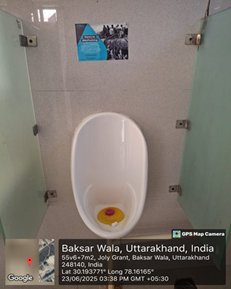
250+ installations saving approximately 37800m3 crore litres annually.
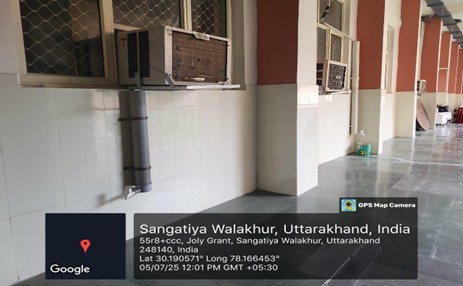
Reuse of Condensed AC Water:
Annual savings of 120 m3.
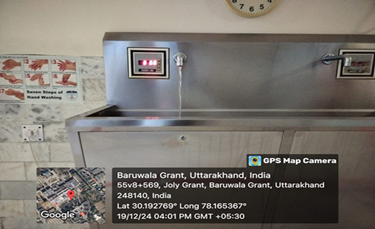
Sensor-Based Scrub Stations:
OT installations saving approximately 5003 per year.
Installation of over 250 waterless urinals across campus has significantly reduced the need for flushing, saving approximately 37800m3.
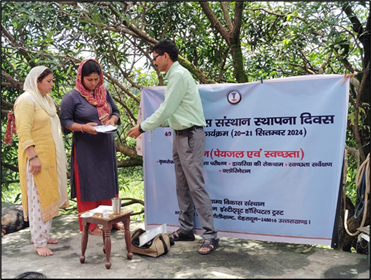
- Villages supported: 550+
- Conservation tanks constructed: 600+ (7,000 litres each)
- Stakeholders trained: 7,787
- Focus areas: aquifer recharge, spring restoration, greywater management
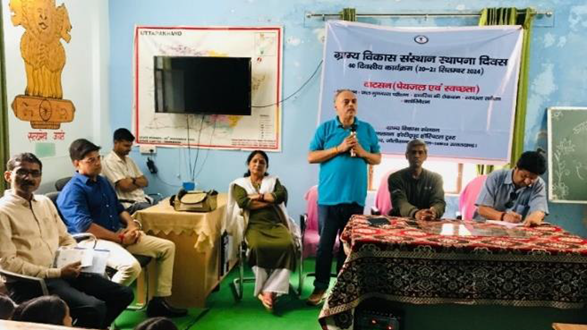
- Experiential learning via STP visits integrated into UG curriculum
Environmental and Social Audit under the Namami Gange Programme
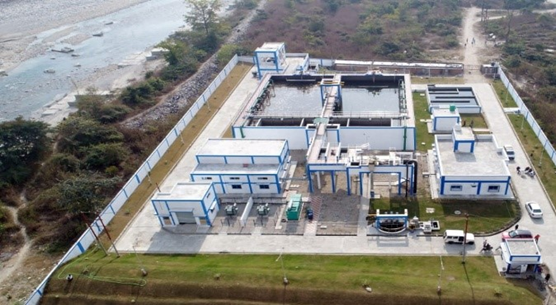
Swami Rama Himalayan University (SRHU) has been engaged as a key evaluator in the Government of India’s Namami Gange Programme, an initiative launched in 2014 to address pollution in the Ganga River. Recognizing the river’s ecological, cultural, and economic importance, SRHU conducts Environmental and Social Audits to assess the performance and community impact of pollution abatement interventions.
SRHU has been entrusted by the State Mission for Clean Ganga (SMCG), Government of Uttarakhand, to conduct comprehensive audits of STPs and Interception & Diversion (I&D) units in nine locations across the districts of Haridwar, Tehri, Dehradun, and Nainital. These audits ensure that interventions comply with sustainability frameworks and maximize community benefits.
Research, Innovation, and Policy Integration
Swami Rama Himalayan University (SRHU) promotes research-driven solutions for water reuse and conservation. Research projects, patents, and publications reflect the university’s academic commitment to developing low-cost, scalable technologies. Water management policies guide the campus community in source segregation, compliant disposal, and safe reuse of wastewater.
Number of patents in water technology: 3 (including rooftop harvester and direct injection system)
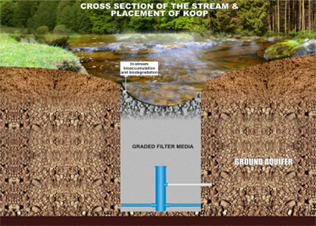
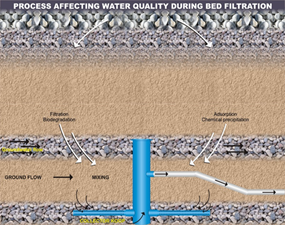
As part of its commitment to sustainable development and water security, SRHU initiated the project “Affordable Climate-resilient Water Supply Infrastructure for the Indian Himalayan Region”. The project focuses on low-cost, climate-resilient, prefabricated source tapping and filtration systems, piloted in a mountain village and intended for scaling across vulnerable geographies. SRHU provides intramural research funding for projects aligned with SDG 6. Notable projects include:
SRHU has addressed critical challenges such as water quality monitoring, wastewater management, bioremediation, and groundwater safety. The following Scopus-indexed publications reflect evidence-based approaches to improving access to clean water and sustainable environmental stewardship:
List of Publications
| S. No. | Paper Title | Authors | Journal / Book Name | Year | DOI / Publication Link |
|---|---|---|---|---|---|
| 1 | Iron bioremediation by utilizing biochar-bacterial composites | Bahuguna, M., Bhandari, G., Joshi, N., .Gangola, S., Chaube, S. | BMC microbiology | 2025 | 10.1186/s12866-025-04564-6 |
| 2 | LED fluorimetric analysis of uranium in potable groundwater and associated health concerns | Negi, R.S.; Prasad, M.; Aswal, R.S.; Uniyal, S.C.; Ramola, R.C. | Journal of Radioanalytical and Nuclear Chemistry | 2025 | 10.1007/s10967-024-09770-6 |
| 3 | Groundwater Quality Assessment in the Foothills of the Kumaun Himalaya, India | Negi, R.S.; Negi, J.S.; Prasad, M.; Singh, K.P. | Water Environment Research | 2025 | 10.1002/wer.70139 |
| 4 | Exploring Papaya Byproducts: A Step toward Circular Economy and Sustainability | Bhatt, S.C.; Negi, S.; Chauhan, M.; Kumar, V.; Vijay, K. | ACS Food Science and Technology | 2025 | 10.1021/acsfoodscitech.4c00872 |
| 5 | Hospital-associated effluents: the masked environmental threat that needs urgent attention and action | Sharma, C.; Gupta, S.; Vijay, K.; Kumar, V. | Discover Applied Sciences | 2025 | 10.1007/s42452-024-06456-2 |
| 6 | Biological removal of iron content from water sources using iron-oxidizing bacteria: a review | Bahuguna, M.; Joshi, N.; Bhandari, G.; Anggayasti, W.L.; Huda, N. | Environmental Pollutants and Bioavailability | 2025 | 10.1080/26395940.2025.2556182 |
| 7 | A Comprehensive Review of Occurrences, Causes, and Health Effects of Arsenic in the Groundwater of India | Singh, V.; Prasad, M.; Aswal, R.S.; Uniyal, S.C. | Heavy Metals in Aquatic Ecosystems: Sources, Transport, and Mitigation | 2025 | 10.1201/9781003632115-15 |
| 8 | Spatial analysis and soft computational modeling for hazard assessment of potential toxic elements in potable groundwater | Aswal, R.S.; Prasad, M.; Singh, J.; Pandey, O.P.; Egbueri, J.C. | Scientific Reports | 2024 | 10.1038/s41598-024-76147-w |
| 9 | Human exposure to uranium through drinking water and its detrimental impact on the human body organs | Ashish, A.; Bangotra, P.; Dillu, V.; Mehra, R.; Singh, N.L. | Environmental Geochemistry and Health | 2024 | 10.1007/s10653-024-02150-9 |
| 10 | Micro-algae: Revolutionizing food production for a healthy and sustainable future | Naik, B.; Mishra, R.; Vijay, K.; Bhatt, S.C.; Rizwanuddin, S. | Journal of Agriculture and Food Research | 2024 | 10.1016/j.jafr.2023.100939 |
| 11 | Valorization of wastewater through bioremediation approach | Aswal, R.S.; Prasad, M.; Kumar, A. | Biotechnologies for Wastewater Treatment and Resource Recovery Current Trends and Future Scope | 2024 | 10.1016/B978-0-443-27376-6.00010-4 |
| 12 | Wireless System for Monitoring of Water Tank Using Emerging Technologies | Malik, P.K.; Singh, S.; Tiwari, P.; Chanti, Y.; Naim, A. | 2024 International Conference on Smart Devices ICSD 2024 | 2024 | 10.1109/ICSD60021.2024.10751058 |
| 13 | Demineralized Water Consumption: Unravelling Current Trends and Health Effects | Joshi, N.; Yadav, N.; Choudhary, A.K.; Shikha, D.; Samant, S. | Proceedings 2024 International Conference on Healthcare Innovations Software and Engineering Technologies (HISET 2024) | 2024 | 10.1109/HISET61796.2024.00061 |
| 14 | United nations sustainable development goals in the context of hydrological extremes | Uniyal, A.; Kaushik, N.; Uniyal, H.P. | Water Sustainability and Hydrological Extremes Quantity Quality and Security | 2024 | 10.1016/B978-0-443-21499-8.00014-3 |
| 15 | Microbiological dimensions and functions in constructed wetlands: A review | Rani, A.T.; Chauhan, M.; Sharma, P.K.; Mitra, D.; Joshi, S. | Current Research in Microbial Sciences | 2024 | 10.1016/j.crmicr.2024.100311 |
| 16 | Probiotics in Aquaculture | Chandra, S.; Joshi, N. | Handbook of Aquatic Microbiology | 2024 | 10.1201/9781003408543-7 |
| 17 | Agricultural Innovations using IOT - A Comprehensive Review | Singh, J.N.; Mall, S.; Arthi, T.S.; Srivastava, D.; Hussein, L. | Proceedings IEEE 2024 1st International Conference on Advances in Computing Communication and Networking (ICAC2N 2024) | 2024 | 10.1109/ICAC2N63387.2024.10895646 |
| 18 | A critical review on green approaches in shape and size evolution of metal nanoparticles and their environmental applications | Kumari, M.; Pandey, S.; Giri, V.P.; Nautiyal, C.S.; Mishra, A. | Environmental Nanotechnology Monitoring and Management | 2023 | 10.1016/j.enmm.2023.100895 |
| 19 | A review on hospital wastewater treatment technologies: Current management practices and future prospects | Bhandari, G.; Chaudhary, P.; Gangola, S.; Rafatullah, M.; Chen, S. | Journal of Water Process Engineering | 2023 | 10.1016/j.jwpe.2023.104516 |
| 20 | Nanotechnology for bioremediation of industrial wastewater treatment | Kumari, M.; Bora, J.; Dhasmana, A.; Sinha, S.; Malik, S.M. | Advanced Application of Nanotechnology to Industrial Wastewater | 2023 | 10.1007/978-981-99-3292-4_7 |
| 21 | Energy from Waste: Poterioochromonas malhamensis Used for Managing Dairy Effluent and Producing Valuable Microalgal Lipid | Dhillon, N.; Gupta, S.; Kumar, V.R.; Bhandari, G.; Arya, S. | Journal of Pure and Applied Microbiology | 2023 | 10.22207/JPAM.17.2.48 |
| 22 | Genomics, Proteomics, and Metabolomics Approaches to Improve Abiotic Stress Tolerance in Tomato Plant | Naik, B.; Vijay, K.; Rizwanuddin, S.; Mishra, S.; Rustagi, S. | International Journal of Molecular Sciences | 2023 | 10.3390/ijms24033025 |
| 23 | The Challenges of Wastewater and Wastewater Management | Kumari, S.; Dwivedi, S.; Khan, E.A.R.; Dhasmana, A.; Malik, S.M. | Advanced and Innovative Approaches of Environmental Biotechnology in Industrial Wastewater Treatment | 2023 | 10.1007/978-981-99-2598-8_5 |
| 24 | Nanofiltration Applications for Potable Water, Treatment, and Reuse | Patel, N.; Dhasmana, A.; Kumari, S.; Nayanam, S.; Malik, S.M. | Advanced and Innovative Approaches of Environmental Biotechnology in Industrial Wastewater Treatment | 2023 | 10.1007/978-981-99-2598-8_7 |
| 25 | Sustainable Green Approaches for Wastewater Purification | Kumari, P.; Dhasmana, A.; Kishore, S.; Mukherjee, N.; Malik, S.M. | Advanced and Innovative Approaches of Environmental Biotechnology in Industrial Wastewater Treatment | 2023 | 10.1007/978-981-99-2598-8_8 |
| 26 | Microbial exopolysaccharides and their application for bioremediation of environmental pollutants | Vijaylakshmi; Hemwati Nandan, R.M.; Chaudhary, S.; Bhandari, G. | Advanced Microbial Technology for Sustainable Agriculture and Environment | 2023 | 10.1016/B978-0-323-95090-9.00014-5 |
| 27 | Remediation of heavy metals by rhizospheric bacteria and their mechanism of detoxification | Gangola, S.; Joshi, S.; Bhandari, G.; Bhandari, N.S.; Mittal, A. | Advanced Microbial Technology for Sustainable Agriculture and Environment | 2023 | 10.1016/B978-0-323-95090-9.00005-4 |
| 28 | A Perspective Review on Microbial Fuel Cells in Treatment and Product Recovery from Wastewater | Malik, S.M.; Kishore, S.; Dhasmana, A.; Minkina, T.M.; Rajput, V.D. | Water Switzerland | 2023 | 10.3390/w15020316 |
| 29 | Microbial Biosurfactants and Their Implication Toward Wastewater Management | Rawat, G.; Choudhary, R.; Kumar, V.R. | Handbook of Environmental Chemistry | 2023 | 10.1007/698_2022_877 |
| 30 | Exploring Microbial-Based Green Nanobiotechnology for Wastewater Remediation: A Sustainable Strategy | Malik, S.M.; Dhasmana, A.; Preetam, S.; Singh, R.K.; Rajput, V.D. | Nanomaterials | 2022 | 10.3390/nano12234187 |
| 31 | Microalgae-based removal of pollutants from wastewaters: Occurrence, toxicity and circular economy | Bhatt, P.; Bhandari, G.; Bhatt, K.; Simsek, H. | Chemosphere | 2022 | 10.1016/j.chemosphere.2022.135576 |
| 32 | Algae in wastewater treatment, mechanism, and application of biomass for production of value-added product | Bhatt, P.; Bhandari, G.; Turco, R.F.; Bhatt, K.; Simsek, H. | Environmental Pollution | 2022 | 10.1016/j.envpol.2022.119688 |
| 33 | Microalgae: A promising tool for pesticide mitigation in wastewater | Rajput, V.; Jaiswal, K.K.; Dhatwalia, V.K.; Kumar, S.K.; Verma, M. | Pesticides Bioremediation | 2022 | 10.1007/978-3-030-97000-0_15 |
| 34 | Biotechnological tools to elucidate the mechanism of pesticide degradation in the environment | Gangola, S.; Bhatt, P.; Alagarasan, J.K.; Bhatt, K.; Rene, E.R. | Chemosphere | 2022 | 10.1016/j.chemosphere.2022.133916 |
| 35 | Microbial fuel cell united with other existing technologies for enhanced power generation and efficient wastewater treatment | Patwardhan, S.B.; Savla, N.; Pandit, S.; Kumar, V.R.; Prasad, R. | Applied Sciences Switzerland | 2021 | 10.3390/app112210777 |
| 36 | Rhizobiont in Bioremediation of Hazardous Waste | Kumar, V.R.; Prasad, R.; Kumar, M.K.M. | Rhizobiont in Bioremediation of Hazardous Waste | 2021 | 10.1007/978-981-16-0602-1 |
Translational Technology, Patents & Community Knowledge Translation
| Category | Technology / Intellectual Property | Key Details / Application |
|---|---|---|
| Patent published | Patent Application No. 202311053398 – “Rooftop Rain Water Harvester” | Civil / Hydrogeology; high-volume underground buffer storage and multi-chamber continuous filtration system for institutional campuses; published in the Indian Patent Journal. |
| Patent published | Patent Application No. 202311008945 – “A System for Injecting Treated Rain Water Directly to Aquifers” | Civil / Water Engineering; dual-filtration injection manifold converting depleted/defunct handpumps into deep-aquifer recharge shafts; published on 02/08/2024. |
| Elsevier publication / Research publication | Book Chapter – “UN SDGs in the Context of Hydrological Extremes” | Published in the Elsevier publication Water Sustainability and Hydrological Extremes (2024). The chapter examines the relevance of the United Nations Sustainable Development Goals (UN SDGs) in addressing hydrological extremes and their implications for sustainable water management. |
| Copyrighted Behavioral Framework | “Pani Ki Kahani” | Behavioral curriculum deployed in rural schools and community centres for water-conservation literacy. |
| Applied Engineering Monograph / Policy Manual | Himalayan Well | Stream-bed subsurface intake technology designed to reduce turbidity in mountainous rivulets (gadheras); validated in partnership with IIT Roorkee. |
| Applied Engineering Monograph / Policy Manual | Steel Intake-cum-Roughening Filter | Prefabricated mountain spring-tapping unit with a daily filtration capacity of 31,000 litres. |
| Applied Engineering Monograph / Policy Manual | Low-Cost Biosand Community Filters | Gravity bio-filters providing approximately 70–80 litres/day of potable water for rural households. |
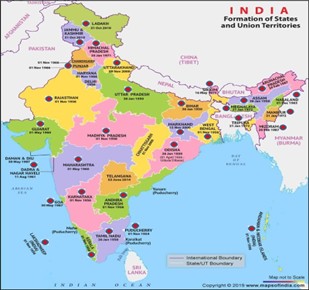
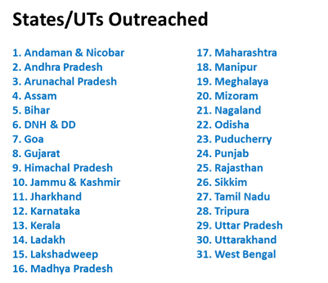
| National Technical Manuals | Jal Jeevan Mission Manuals | Operation & Maintenance guidelines, DPR preparation codes, and disaster WASH response protocols reportedly utilized across 31 States & UTs. |
Certificate of Patent published for “Rooftop Rainwater Harvester”
Certificate of Patent published for “A System for Injecting treated rainwater directly to the aquifer”
Book chapter on "UN SDGs in the context of hydrological extremes" published in the Elsevier publication "Water Sustainability and Hydrological Extremes", 2024 from ScienceDirect – Elsevier website.
Pani ki Khani Copyrighted Certificate & front page of Pani ki Khani (Copyrighted publication)
Direct Injection technology Copyrighted Certificate & front page of “Recharging of Water Source through Handpump -DI Technology (Copyrighted publication)
List of Book, Manual & Article Publications under RDI and SRHU
- “Cost-Effective, Disaster-Resilient Innovative Techniques for Achieving United Nations Sustainable Development Goals and Sustainable Operation and Maintenance of Water Supply Schemes in the Indian Himalayan Region” published in 5th National Conference on Recent Innovations in Emerging Technology & Science (20-21 September, 2024).
- “Innovative and Sustainable Aquifer Rejuvenation through Direct Injection of Rainwater in the Hilly Regions” published in 5th National Conference on Recent Innovations in Emerging Technology & Science (20-21 September, 2024).
- “Jal Jeevan Mission – PRIs, VWSCs and Community”, 2023
- “Revival of Traditional water bodies for source sustainability” for Mid management officials, 2023
- “Springshed Management, Direct Injection for long term source sustainability” for Mid management officials, 2023
- “Operation & Maintenance of water schemes” for Mid management officials, 2023
- “Grey Water Management, Nature based solutions and Circular Economy” for Mid management officials, 2023
- “WASH Services during Disaster & Emergency” for Mid management officials, 2023
- “Implementation Support Agency Role & Activities in Jal Jeevan Mission” for NGOs, 2022
- Article in Jal Jeevan Samvad National Magazine of Govt. of India on “Demystifying Jal Jeevan Mission, 2023; “Participatory Planning, Implementation, O&M”, 2021; and “Long term Source Sustainability, recharge and management of drinking water sources”, 2021
Evidences of List of Book, Manual & Article Publications under RDI and SRHU
|
WATSAN Imprints (Training Manual)
|
WATSAN (Technical Manual)
|
|
Innovative Model for Rooftop Rain Water Harvesting
(Technical Manual)
|
Uttaranchal Koop (Technical manual)
|
|
Community Filter (Technical manual)
|
Solar pumping water scheme (Technical manual)
|
|
Steel Intake cum Roughening filter (Technical manual)
|
Grey Water Management (Technical manual)
|
|
Handbook for revival of traditional water bodies
(Technical manual)
|
Handbook for WASH services during
disaster (Technical manual)
|
|
Handbook for O&M of RWSS (Technical manual)
|
Technical guidelines for preparation
of detailed project report
|
|
Training manual for ISAs
|
Training manual for VWSC/ PRI members
|
Research, Strategic Studies, Assessment and Impact Evaluation
SRHU undertakes research and studies on water, sanitation, environmental sustainability, and public health, while developing and implementing innovative technologies, interventions, and community-based solutions in the field. These initiatives are piloted and evaluated in real-world conditions to assess their technical, social, environmental, and economic impacts, with the aim of improving and refining the technologies for wider application.
Through this research-to-field approach, the Unit works towards developing cost-effective, climate-resilient, sustainable, and community-centric solutions that improve water security, sanitation, health, and overall community well-being.
| Title of Study & Research | Description |
|---|---|
| Social and Environmental Audit of STPs and I&Ds under Namami Gange Programme | Conducting social and environmental audit, impact evaluation of sewage treatment plans in District – Dehradun, Tehri, Haridwar and Nainital under Namami Gange Program |
| National Mission on Himalayan Studies, Ministry of Environment, Forest & Climate Change, Government of India “Affordable Climate-resilient Water Supply Infrastructure Prototype for Indian Himalayan Region” | Design low-cost, climate-resilient water supply infrastructure prototype and pilot I in the districts of Pauri, Rudraprayag, Chamoli, Tehri, and Uttarkashi, Uttarakhand |
| Direct Injection of Rainwater through Handpump for recharging of aquifers in Mountainous Areas (Patented) | Innovative technology of aquifer recharging developed. 36 Cr. Sanctioned to GoUK by GoI under Jal Shakti Abhiyan 2023 for this technology scaleup |
| Innovative 365 Days Model of Rooftop Rain Water Harvesting for non-potable uses (Patented) | Rooftop rain water being used in toilets of various buildings for all round the year and remaining water used for recharging of ground water |
| Individual Rooftop Rainwater Harvesting of 7 KL capacity | 600+ Individual Rooftop rainwater harvesting tanks constructed where water sources not available |
| Innovative Technologies for tapping of Spring & Stream in Mountainous Area | Developed Disaster prone water supply technologies – Uttaranchal Koop for stream and Steel Intake for Spring |
| Health & hygiene benefits through WATSAN | To study the sustainable health & hygiene benefits |
| Action Research on Solar Pumping water supply scheme |
|
| Geo-hydrology based Springshed Management | Science based concept of spring recharge using traditional wisdom |
| Open Defecation Free Verification (Evaluation) Study in 5 Districts of U.P. | ODF Verification Study was conducted in 96 Gram Panchayats of U.P. to find out ODF Status and to ensure improved sanitation behaviour and practices |
| Health Benefit Study of World Bank funded Swajal Project | Impact assessment through implementation of water & sanitation project |
| Impact Assessment Study | Impact assessment (social, technical, financial, environmental) on community through implementation of Swajal project |
| Project Implementation Plan | Pre-feasibility, Planning & Implementation guideline of water and sanitation project |
| Information Needs Assessment | Identifying information needs of various stakeholders under WATSAN sector |
| Institutional Mapping Exercise and Publishing Blue Pages | Blue book of the water & sanitation institutes |
Plan for Minimizing Alteration of Aquatic Ecosystem
Plan for Minimizing Alteration of Aquatic Ecosystem (2022-2030)