IQAC Cadaveric Lab
December 30, 2025 2026-02-23 9:22IQAC Cadaveric Lab
Cadaveric Lab
Workshops Conducted
Diverse Range
Medical Impact
Title of the Practice
Objectives
Medical programmes lay immense focus on improving anatomic knowledge for surgical procedures.
Surgeons need a good understanding of anatomy to manage patients intra-operatively and postoperatively. Cadaveric workshops help in improving the surgical procedural skills without the stress of an operation theatre.
The objective of the Cadaver lab is to provide a facility for improving procedural knowledge, understanding difficult anatomical relationships, and improving operative confidence for complex surgeries, further supporting the utility of simulation as a tool to help prepare trainees for independent practice through hands-on training.

Context
Practice
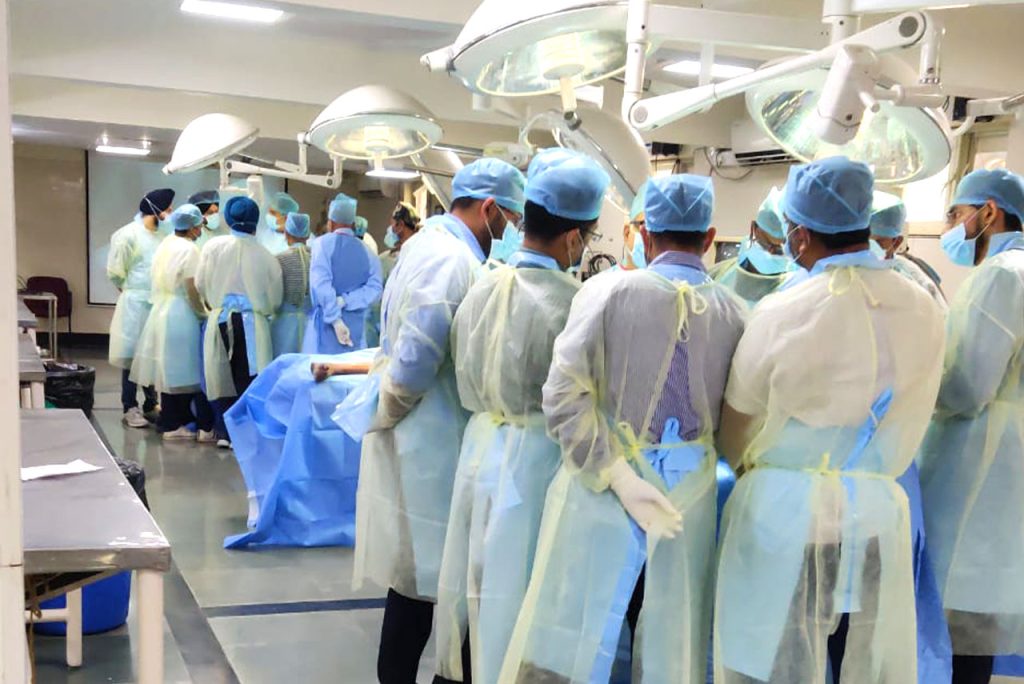
Initially, there were cadaveric workshops for internal postgraduate students in University with formalinfixed limbs. However, such cadavers failed to provide a life-like experience, and this led to the concept of soft cadavers with good joint flexibility. Over a period, we developed techniques of preservation which have now become the main strength of our unit. We now provide regular training to not only our own students, also medical professionals of other institutions also come here now for advanced learning, often facilitated by our collaborators. The quality of cadavers is matchless, hence these organizations prefer our facility because of available lifelike cadavers. We organize body donation camps in potential areas like old age homes and receive ample body donations under the body donation drive conducted by the Department of Anatomy. All donors are duly acknowledged, and transport facility is provided during body collection. All bodies are immunologically tested while receiving them to ensure complete safety of learners.
Facility
Workshops conducted
- Arthroplasty – Hip & Knees, Primary and Revision
- Arthroscopy – Basic & Advanced
- Pelvis – Acetabular Fracture Fixation Procedures
- Minimally Invasive Spine Surgeries
- Thyroid Surgeries
- Cosmetic Surgeries on the Nose and Septoplasty
- Bronchoscopy Surgeries and Procedures
- Cryotherapy in Pulmonology Procedures
- Trauma Procedures
- Gynecological Surgical Procedures

Future plans
Evidence of Success
| Year | No. of Workshop Conducted | No. of Trainees Trained |
|---|---|---|
2014 | 16 | 228 |
2015 | 10 | 111 |
2016 | 19 | 306 |
2017 | 13 | 179 |
2018 | 10 | 222 |
2019 | 9 | 269 |
2020 | 2 | 60 |
2021 | 0 | 0 |
2022 | 1 | 46 |
2023 | 11 | 236 |
Problems Encountered and Resources Required
- Procuring good-quality cadavers has been a major challenge due to increasingly stringent legal requirements. This has been addressed by organizing body donation awareness programs in targeted communities to educate people about donating bodies after death for teaching, training, and research purposes. These programs are currently the primary source of body procurement; however, active support from government authorities is required to procure a greater number of unclaimed bodies.
- The high cost of maintenance is another significant challenge, as the cold chamber facility requires 24×7 power backup, leading to substantial maintenance expenses.
- A dedicated CT scan and MRI facility attached to the unit is urgently needed, considering future plans to initiate robotic cadaveric workshops.
Notes
Title of the Practice
Objectives
Medical programmes lay immense focus on improving anatomic knowledge for surgical procedures.
Surgeons need a good understanding of anatomy to manage patients intra-operatively and postoperatively. Cadaveric workshops help in improving the surgical procedural skills without the stress of an operation theatre.
The objective of the Cadaver lab is to provide a facility for improving procedural knowledge, understanding difficult anatomical relationships, and improving operative confidence for complex surgeries, further supporting the utility of simulation as a tool to help prepare trainees for independent practice through hands-on training.
Context
Practice
Initially, there were cadaveric workshops for internal postgraduate students in University with formalinfixed limbs. However, such cadavers failed to provide a life-like experience, and this led to the concept of soft cadavers with good joint flexibility. Over a period, we developed techniques of preservation which have now become the main strength of our unit. We now provide regular training to not only our own students, also medical professionals of other institutions also come here now for advanced learning, often facilitated by our collaborators. The quality of cadavers is matchless, hence these organizations prefer our facility because of available lifelike cadavers. We organize body donation camps in potential areas like old age homes and receive ample body donations under the body donation drive conducted by the Department of Anatomy. All donors are duly acknowledged, and transport facility is provided during body collection. All bodies are immunologically tested while receiving them to ensure complete safety of learners.
Facility
Workshops conducted
- Arthroplasty – Hip & Knees, Primary and Revision
- Arthroscopy – Basic & Advanced
- Pelvis – Acetabular Fracture Fixation Procedures
- Minimally Invasive Spine Surgeries
- Thyroid Surgeries
- Cosmetic Surgeries on the Nose and Septoplasty
- Bronchoscopy Surgeries and Procedures
- Cryotherapy in Pulmonology Procedures
- Trauma Procedures
- Gynecological Surgical Procedures
Future plans
Evidence of Success
| Year | No. of Workshop Conducted | No. of Trainees Trained |
|---|---|---|
2014 | 16 | 228 |
2015 | 10 | 111 |
2016 | 19 | 306 |
2017 | 13 | 179 |
2018 | 10 | 222 |
2019 | 9 | 269 |
2020 | 2 | 60 |
2021 | 0 | 0 |
2022 | 1 | 46 |
2023 | 11 | 236 |
Problems Encountered and Resources Required
- Procuring good-quality cadavers has been a major challenge due to increasingly stringent legal requirements. This has been addressed by organizing body donation awareness programs in targeted communities to educate people about donating bodies after death for teaching, training, and research purposes. These programs are currently the primary source of body procurement; however, active support from government authorities is required to procure a greater number of unclaimed bodies.
- The high cost of maintenance is another significant challenge, as the cold chamber facility requires 24×7 power backup, leading to substantial maintenance expenses.
- A dedicated CT scan and MRI facility attached to the unit is urgently needed, considering future plans to initiate robotic cadaveric workshops.