
Swami Rama University demonstrates a strong commitment to environmental sustainability by integrating responsible resource management into its academic and operational practices. The University emphasizes energy efficiency, sustainable campus planning, and eco-friendly mobility to reduce its environmental footprint.
Environmental awareness is promoted through academic curricula and research initiatives focused on sustainability. These efforts reflect the University’s dedication to environmental stewardship and long-term sustainable development.
Key Features:
- Commitment to environmental sustainability
- Energy-efficient infrastructure
- Sustainable campus and mobility practices
- Integration of sustainability in academics
- Responsible environmental governance
Environmental Impact
SRHU’s environmental initiatives contribute directly to reducing carbon emissions, improving air quality, enhancing resource efficiency, and strengthening institutional compliance with sustainability standards.
Key Activities:
Training & Capacity Building
The University regularly conducts training programmes, workshops, and orientation sessions to sensitize students, faculty, staff, and stakeholders on environmental sustainability, climate responsibility, and best green practices.
Training Programmes:
Disaster Management & Preparedness
Air Quality Index (AQI) at SRHU
The Air Quality Index (AQI) at Swami Rama Himalayan University (SRHU) reflects the level of air pollution and its potential impact on health. AQI is calculated based on pollutants such as particulate matter (PM₂.₅ and PM₁₀), carbon monoxide, nitrogen dioxide, sulfur dioxide, and ozone.
Generally, SRHU benefits from a relatively cleaner environment due to its location in the Himalayan foothills, though AQI levels may fluctuate because of seasonal changes, traffic, construction, and weather conditions.
Monitoring AQI at SRHU helps in raising awareness, protecting public health, and promoting sustainable practices among students and staff.
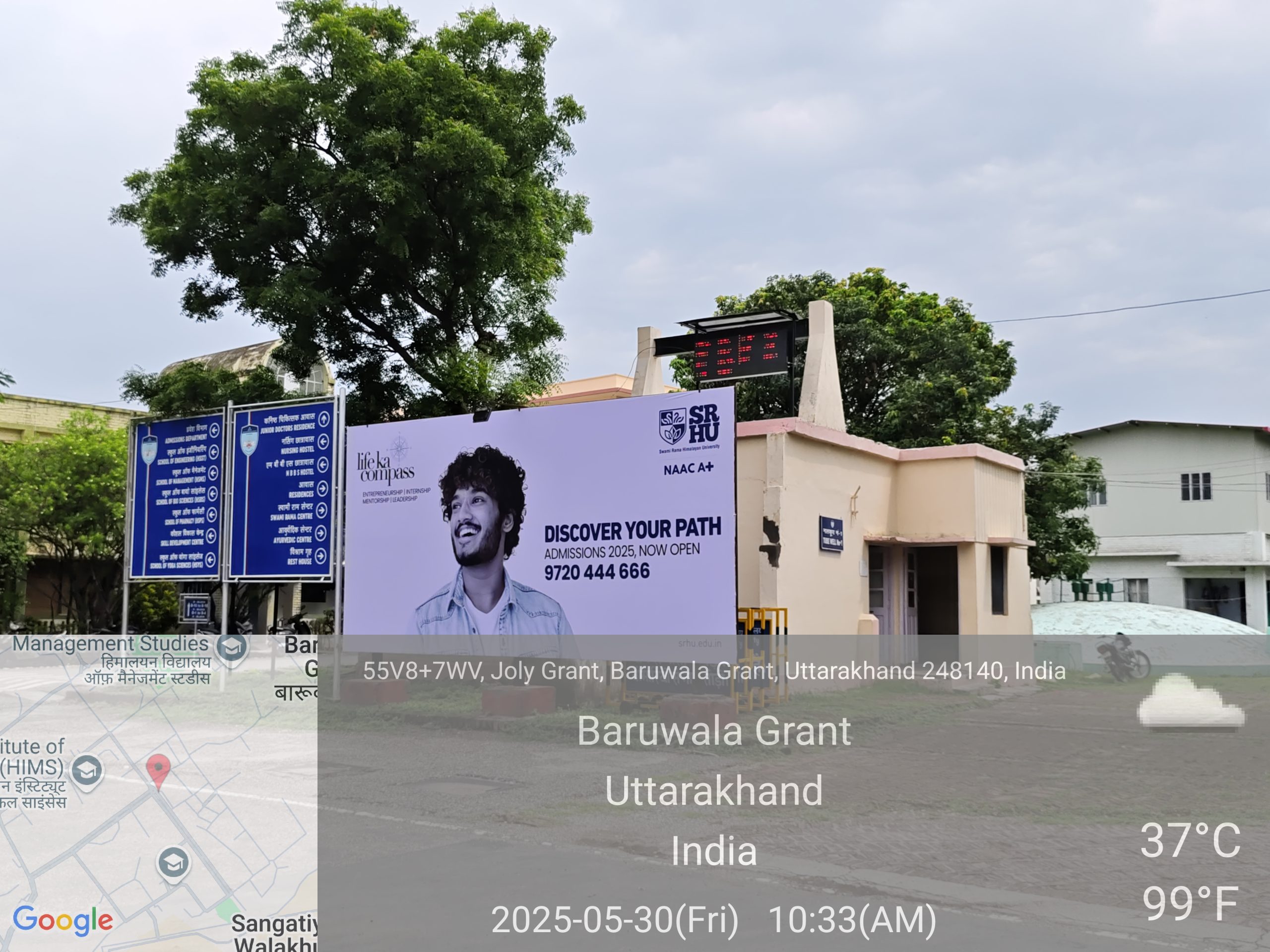
AQI Images
Audit & Certification
An energy audit at SRHU examined electricity consumption, lighting systems, HVAC usage, and renewable energy potential. The audit identified energy-saving opportunities, recommended efficient technologies and behavioural changes, and emphasized monitoring practices to reduce costs and carbon emissions.
| Audit Reports & Certificates | |
|---|---|
| 2022 – 2023 | Certificate |
| 2023 – 2024 | Certificate |
| 2024 – 2025 | Certificate |
An environmental audit at SRHU assessed energy use, water management, waste handling, and campus biodiversity. The audit recommended efficiency improvements, reduced emissions, improved waste segregation, and awareness programmes across academic and healthcare units.
| Audit Reports & Certificates |
|---|
| 2024 |
| 2025 |
| Certificate (2024-2027) |
The green audit evaluated energy conservation, water usage, waste management, green cover, and sustainable transportation, recommending practices to reduce carbon footprint and strengthen green campus culture.
| Audit Reports | Certificates |
|---|---|
| 2022 – 2023 | View |
| 2023 – 2024 | View |
| 2024 – 2025 | View |
| Carbon Footprint Certificates |
|---|
| 2021 – 2022 |
| 2022 – 2023 |
| 2023 – 2024 |
| 2024 – 2025 |
The University is committed to advancing Climate Action (SDG 13) through continuous monitoring of emissions, implementation of mitigation strategies, and transparent disclosure of progress.