
Life on Land
About this goal
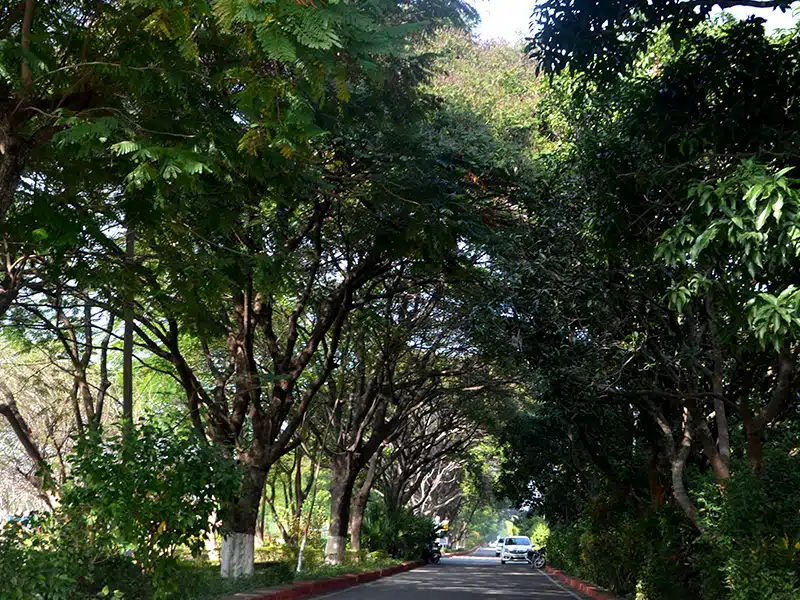
The campus itself provides much of the evidence for this goal. Its green belt of 160,800 m² contains more than 6,000 trees of 125 plant species and supports fifteen species of birds and twenty-two species of butterflies, so the grounds serve as a biodiversity laboratory as well as a place of teaching. Beyond the campus, the University conducts conservation research with a CSIR institute in Palampur.
How this goal is assessed
The Times Higher Education Impact Rankings assess Goal 15 against the 4 indicators below. The weighting shows each indicator's share of the score for this goal, and the evidence for each indicator is taken from the University's report.
Share of the Goal 15 score
-
15.1
Research on life on land
- SRHU published 39 research papers aligned with SDG 15 during 2021–2025, according to the University's Scopus export.
- Six of these SDG 15 publications appeared in 2025, including work on iron bioremediation using biochar and bacterial composites.
- The SDG 15 publications for 2021–2025 have an average Field-Weighted Citation Impact of 2.17.
-
15.2
Education related to land ecosystems
- In 2025, training under the Comprehensive Community Development Programme run by SRHU and RDI had helped over 5,000 farmers in adopted villages to adopt organic and water-smart farming.
- In 2025, the programme reclaimed 4.374 acres (7 bighas) of barren land in Malethi, and farmers produced 20.35 quintals of climate-resilient and traditional crops.
- SRHU's Policy for Sustainably Farmed Food on Campus, in place since 2019 and reviewed in 2022, promotes sustainable, locally sourced, seasonal and plant-based food.
-
15.3
Supporting land ecosystems through action
- The campus has a 160,800 m² green belt with over 6,000 trees of 125 plant species, which supports 15 bird and 22 butterfly species.
- SRHU's Policy for Sustainable Use, Conservation and Restoration of Land has been in place since 2019 and was reviewed in 2022.
- SRHU's policies on monitoring IUCN and other conservation species and on reducing the impact of alien species have both existed since 2019 and were reviewed in 2022.
-
15.4
Land-sensitive waste disposal
- In 2025, 100% of wastewater was treated and reused through SRHU's 1 MLD Sewage Treatment Plant and 90 KLD Effluent Treatment Plant.
- SRHU recycled 5,600 kg of plastic waste during 2021–2025 with CSIR-Indian Institute of Petroleum, its Social Technology Partner for the Plastic-to-Diesel Lab project.
- SRHU's Policy on Bio-Medical Waste Management, which includes hazardous waste disposal, has been in place since 2019 and was reviewed in 2022.
Source · SRHU SDG 15 report, 2025. Indicator numbers and weightings follow the Times Higher Education Impact Rankings 2025 methodology.
What the year showed

Flowering trees and palms on the SRHU campus form part of a green belt of over 6,000 trees.

The Biodiversity Park is one of the campus spaces where local plant species are included in planning and development.

A field visit under the National Jal Jeevan Mission programme, through which SRHU supported springshed restoration and rainwater harvesting tanks.
Source · SRHU SDG 15 report, 2025
Explore the evidence →Evidence by assessment area
Assessment covers four areas, namely research, teaching, outreach and stewardship. The reporting is arranged in the same way, so that a single piece of evidence can be cited directly without referring the reader to the whole report.
Research for Goal 15
Publications, projects, patents and research income attributed to this goal.
Teaching for Goal 15
Programmes, courses and training through which the goal enters the curriculum.
111 courses map to this goal →Outreach for Goal 15
Work with communities, agencies, industry and other institutions beyond the campus.
Stewardship for Goal 15
The University's own operations, including estates, policy, governance and employment.
The full 2025 report
The University's report for Goal 15, with all the evidence summarised above. PDF · 3.9 MB.
Goal-wise reports by year
Consolidated
Who maintains this page
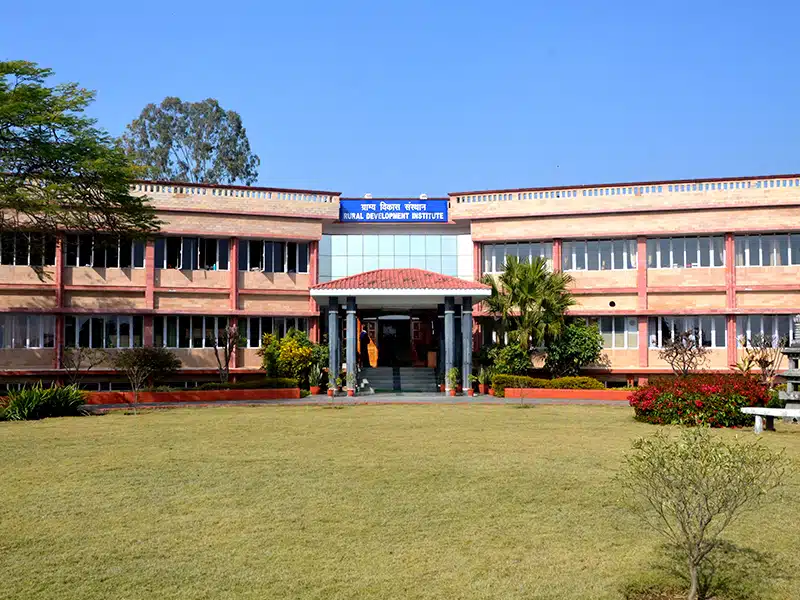
Reporting for Goal 15 is compiled by the SDG Cell from evidence supplied by the constituent colleges, the Rural Development Institute and the Registrar's Office. Corrections and additions are welcome.
Institutional Scope and Data Sources
The information presented in these reports draws upon the University's academic, healthcare, research and community outreach activities. It encompasses initiatives across the 200-acre campus at Jolly Grant, the 1,200-bed teaching hospital, telemedicine centres at Toli and Nagthat, and the WATSAN Department's sustained engagement with more than 550 villages since 1998. These institutional and community-level activities provide a comprehensive account of the University's contributions and initiatives.
 Planet
 People
 Partnership
 Health