
Reduced Inequalities
About this goal
Inequality is most clearly seen at the point of care. The evidence for this goal includes cleft lip and palate treatment for underprivileged children through Smile Train and community-based rehabilitation for people with disabilities. It also includes the admission and non-discrimination policies that govern the University itself.
How this goal is assessed
The Times Higher Education Impact Rankings assess Goal 10 against the 5 indicators below. The weighting shows each indicator's share of the score for this goal, and the evidence for each indicator is taken from the University's report.
Share of the Goal 10 score
-
10.1
Research on reduced inequalities
- SRHU published 9 publications on reduced inequalities during 2021–2025, including 4 published in 2025.
- These SDG 10 publications have a field-weighted citation impact (FWCI) of 1.26.
-
10.2
First-generation students
- In 2025, 13 of the 1,261 students starting a bachelor's degree at SRHU were first-generation students, a proportion of 1.03%.
-
10.3
Students from developing countries
- In 2025, SRHU enrolled one international student from a developing country, Nepal, out of 4,320 students, a proportion of 0.02%.
- This student received financial support from the University through a merit scholarship.
-
10.4–10.5
Proportion of students and staff with disabilities
- In 2025, SRHU enrolled one student with a disability out of 4,320 students, a proportion of 0.02%.
- SRHU employs 6 employees with disabilities out of a total of 3,142 employees, a proportion of 0.19%.
-
10.6
Measures against discrimination
- The Non-discriminatory Admissions Policy, Anti-Discrimination Policy and Disability Accommodation Policy have been in place since 2019, were reviewed in 2022 and are published on the SRHU website.
- SRHU has designated a University Diversity Officer (Anti-Discrimination Officer) and established an SC/ST Cell to support students and employees from SC/ST/OBC/Minority communities.
- Campus facilities include ramps with railings, disabled-friendly lifts, a tactile path and desktops with NVDA screen-reading software and Braille keyboards for visually impaired users.
Source · SRHU SDG 10 report, 2025. Indicator numbers and weightings follow the Times Higher Education Impact Rankings 2025 methodology.
What the year showed

Ramps with railings are among the campus facilities provided for people with disabilities, including the 6 employees with disabilities.
Source · SRHU SDG 10 report, 2025
Explore the evidence →Evidence by assessment area
Assessment covers four areas, namely research, teaching, outreach and stewardship. The reporting is arranged in the same way, so that a single piece of evidence can be cited directly without referring the reader to the whole report.
Research for Goal 10
Publications, projects, patents and research income attributed to this goal.
Teaching for Goal 10
Programmes, courses and training through which the goal enters the curriculum.
108 courses map to this goal →Outreach for Goal 10
Work with communities, agencies, industry and other institutions beyond the campus.
Stewardship for Goal 10
The University's own operations, including estates, policy, governance and employment.
The full 2025 report
The University's report for Goal 10, with all the evidence summarised above. PDF · 3.4 MB.
Goal-wise reports by year
Consolidated
Who maintains this page
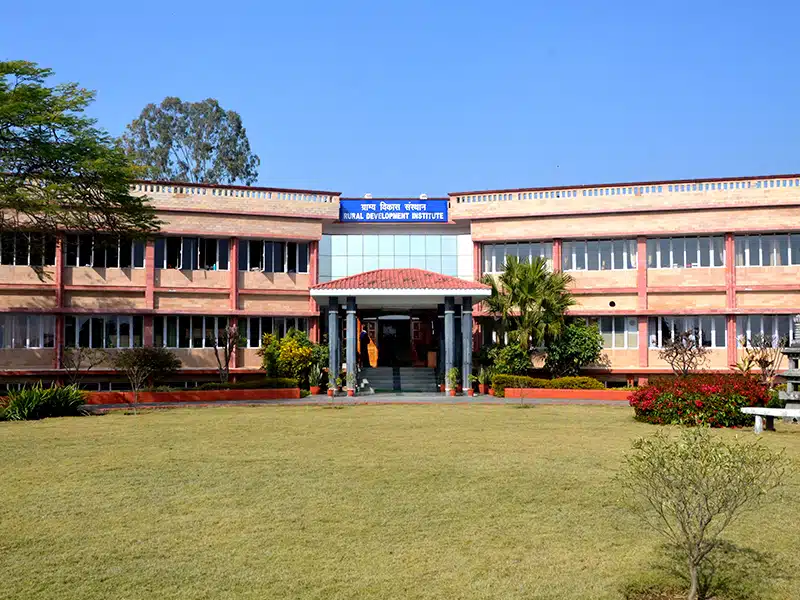
Reporting for Goal 10 is compiled by the SDG Cell from evidence supplied by the constituent colleges, the Rural Development Institute and the Registrar's Office. Corrections and additions are welcome.
Institutional Scope and Data Sources
The information presented in these reports draws upon the University's academic, healthcare, research and community outreach activities. It encompasses initiatives across the 200-acre campus at Jolly Grant, the 1,200-bed teaching hospital, telemedicine centres at Toli and Nagthat, and the WATSAN Department's sustained engagement with more than 550 villages since 1998. These institutional and community-level activities provide a comprehensive account of the University's contributions and initiatives.
 Planet
 People
 Partnership
 Health